“I don’t understand… the atomic bombing of Hiroshima and Nagasaki… All those civilians…”
My wife’s sad observation three days ago echoed the lamentations which have reverberated since 6Aug1945 and, later, seventy-seven years ago to this very day when one… and then another ominous cloud marked the first – and last – time devastation of that magnitude was ever unleashed by man against his fellow man.
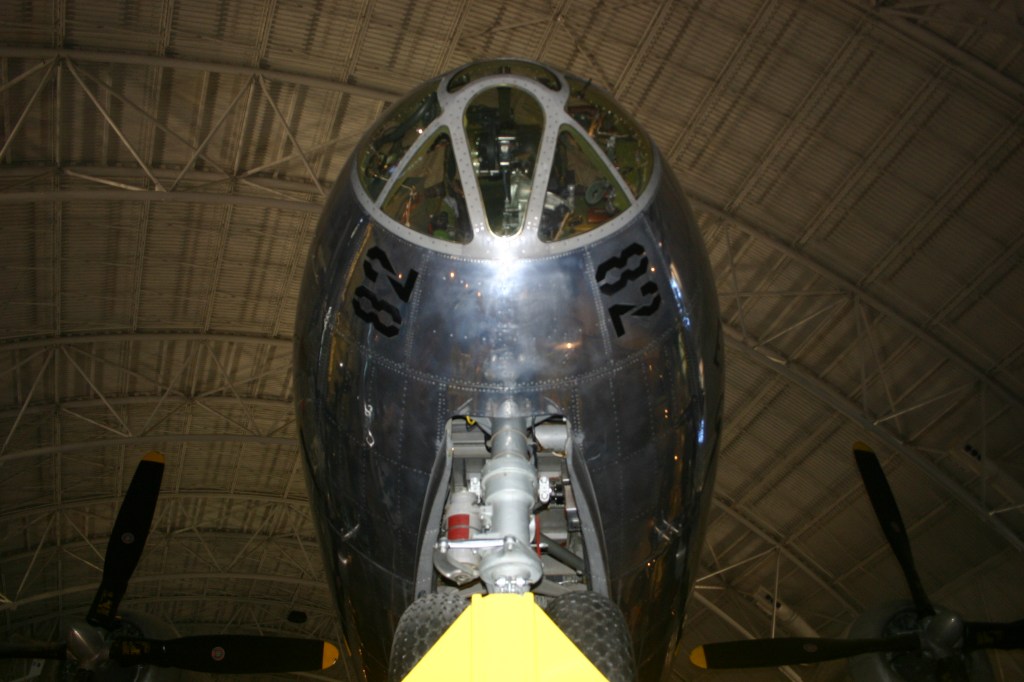
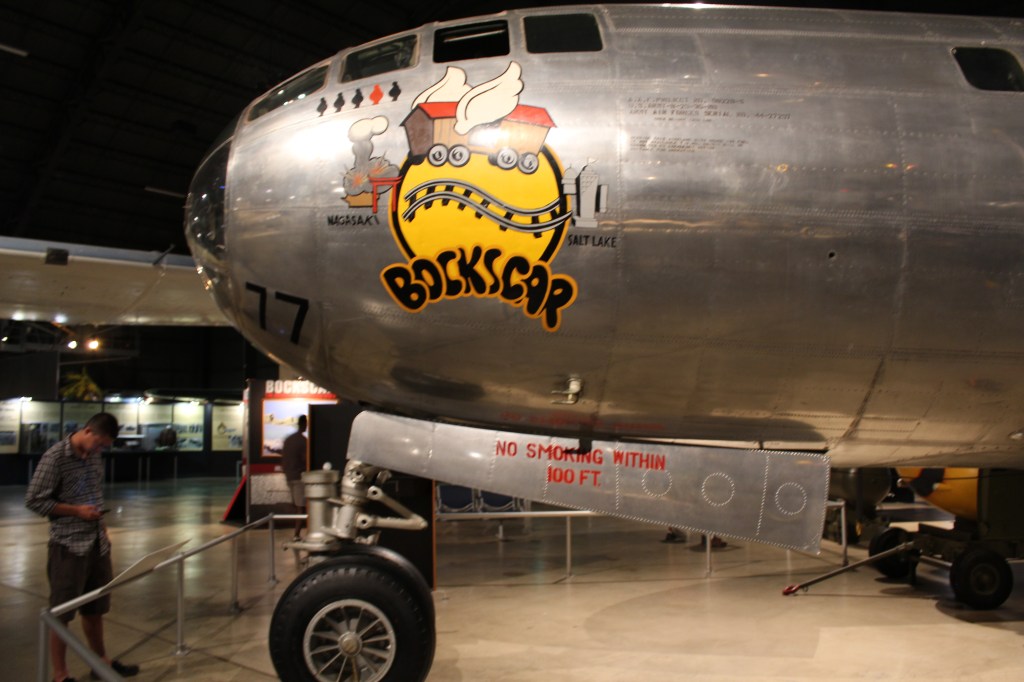
I have stood under the Enola Gay at the Udvar-Hazy Center where she finally rests after a tumultuous reentry into public display. I have stood before Bockscar at the National Museum of the Air Force – on the day I found out I was going to be a father and many times with the same son over the years. I have ventured to where Chicago Pile-1 went critical in 1942, and I have speculated on the logistics of the road trip to the middle of the New Mexico desert to the Trinity Site… as well as mulled over trips to Tinian, Bikini Atoll, Hiroshima, Nagasaki, and Chernobyl (Fukushima is, understandably and distinctively not on this list for the time being).
The necessity of the bombing of both cities has been contested and questioned at length over the last seven decades; more than likely, it will always be the epicenter for historians and laypersons alike to continue to debate. Questions of the submarine blockade of Japanese maritime sea lanes of communication, the diminished caloric intake (less than 1,800 calories, compared to the minimum of 2,160 calories according to one source and as low as 1,680 according to a different source), the severe limitations on resource import and domestic production… These factors would normally imply that the effectiveness of the Japanese military – and as a contributing factor – the Japanese industrial base which supported it were no longer viable for continued offensive operations.
The political momentum in Japan is often overshadowed by those two days in August 1945, however. This, in my opinion, is both tragic and indicative of a larger failure to understand not just why wars are started, but what keep them going longer than they need to – when the tide has clearly turned against one side which remains doggedly engaged in the conflict.
The Potsdam Declaration of 26July1945 consisted of seven conditions for Japanese surrender following the clear directive:
Following are our terms. We will not deviate from them. There are no alternatives. We shall brook no delay.
In retrospect, these terms might be viewed as reasonable. The elimination “of those who have deceived and misled the people of Japan into embarking on world conquest,” the Allied occupation of Japan, the limitations of the Japanese empire to the Home Islands, disarmament with the promise that those in the military “shall be permitted to return to the homes with the opportunity to lead peaceful and productive lives,” the promise of “freedom of speech, of religion, and of thought, as well as respect for the fundamental human rights,” the protection of national industries and “participation in world trade relations,” the promise of Allied withdrawal from Japan… All of this, underscored with the final and somber reminder that “the alternative for Japan is prompt and utter destruction.”
Considering the Treaty of Versailles which ended the First World War and established the simmering German resentment which contributed greatly to the Second World War, it is easy to arrive at the conclusion that the terms and conditions presented to Japan were, indeed, reasonable.
However, what is reasonable from the comfort of the present may have been untenable to those faced with that particular choice. Similarly, and as with any regime which asserts total control of the society they lead, the inevitable threat of accountability for the actions taken often spiral into frantic and desperate efforts to maintain that exact control for as long as possible.
The true evil, in this case, lies with the political momentum of the Japanese War Council in that, despite the firebombing of Japanese cities, the starvation, the slowed production, and – most importantly – the loss of Japanese lives in often futile and ill-conceived offensive actions (in many examples, “offensive” would be the best adjective to describe the obscene squandering of their soldiers, sailors, and airmen)… all of these factors were disregarded for the sake of continuing the war for their own purposes rather than for the needs of the Empire.
[Sigh]
Yet, as I typed that last sentence, my mind wandered to the motivations for why we have fought throughout history; I cannot honestly place casual blame while disregarding the societal norms and cultural realities which are both foreign and distant to where I am at this moment in time.
Was it worth it? Was a very necessary evil justified by both intent and result?
We will never truly know – there is no way to accurately know what would have happened and how many lives on both sides would have been lost, had Operation Downfall been launched. Of course, it could be argued and mathematically deduced that the Japanese population may have been reduced by obscene numbers; likewise, Allied losses would have been equally appalling. Would that have been a better ethical and moral outcome for some folks? How would that outcome have influenced the second-, third-, and fourth-order effects as the Treaty of Versailles unintentionally created the conditions for something far worse than intended?
My own answer to whether the bombing of Hiroshima and Nagasaki was justified is simple:
Yes… for we know, from these unfortunate examples, how not to conduct ourselves in conflict; to discredit that lesson would negate the horrible loss of life and make us accessories to the crimes of tomorrow.
Discover more from milsurpwriter
Subscribe to get the latest posts sent to your email.
 milsurpwriter
1 thought on “A Very Necessary Evil”