There are times when the question of the validity and wisdom of pursuing a degree in history was the best decision:
…Bachelor’s degree or higher (in Engineering, Computer Science, Math, Physics, or related field) …
…bachelor’s degree in engineering is required.
…A bachelor’s degree in business administration or a financial field with a GPA >3.4 is required.
It can be frustrating and demoralizing at times, but it can also be inspiring.
With such a strong aviation background, it possibly would have made more sense to look at an industry-specific course of education. Aeronautical Science… Aerospace & Occupational Safety… Aviation Maintenance… Human Factors Psychology… any of these would as interesting as they would be desirable to future employers.
However, there is never a “perfect” route and the academic path chosen has offered me much more insight and inspiration to a broader notion of unifying ideas and knowledge.
“A degree is only a piece of paper.”
While this statement is factually true, it is also problematic that, much like currency represents an unseen value, it misses a key aspect of worth: it is only as good and what the individual actually invests in and learns from the process.
History has given me an opportunity to consider, research, and connect many different disciplines in order to provide contextual relevance as well as a guide to individual and organizational potential. Social sciences like economics, psychology, sociology, geography, anthropology… combined with an appreciation for the traditional sciences like physics, metallurgy, geology, statistics, industrial/manufacturing processes, and transportation are all independent and specialized fields of academic focus. For historians, however, they are all subject areas which are an aggregate of an effective and holistic approach to the past and tools which are relied upon to create a more complete understanding of the complexity of individuals, groups, and resources of events from our past which are recorded, studied, and discussed today.
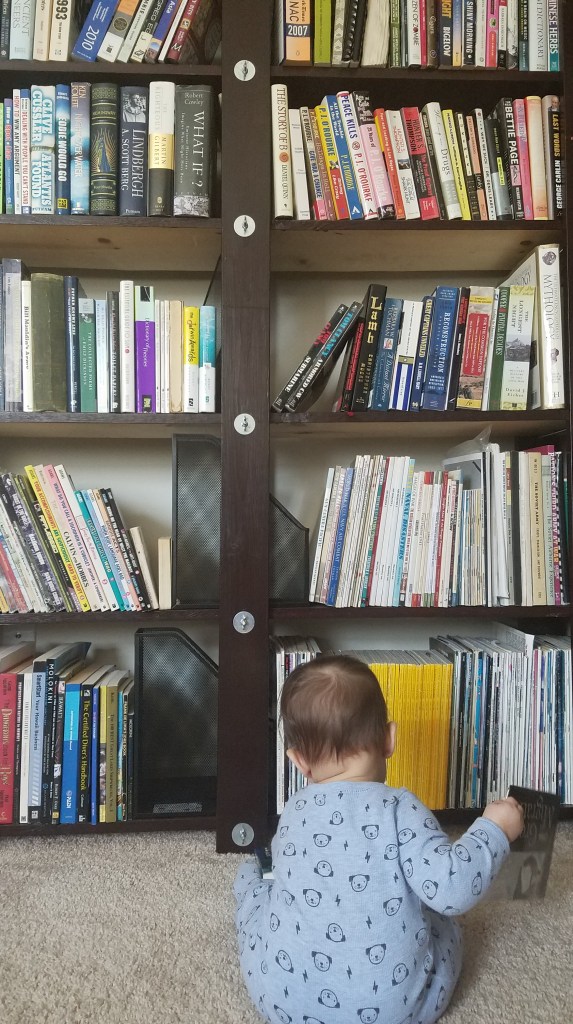
This leads me to the inevitable conclusion about two aspects of history which continues to fascinate and inspire me: logistics and leadership. These elements are often the intersection of the physical and social disciplines; the former are an understanding of the capabilities, intent, and resources dictated by the latter. They also, quite often, represent absolutes which bridge many career fields and disciplines: the need to get a resource or product from one point to another and the method of getting a group of individuals to act towards a single goal or outcome. One cannot move iron ore from Duluth, Minnesota, to the steel mills of Pittsburg, Pennsylvania without having a solid grasp of the relationship between the product, process, and people involved, after all…
For me, history also provides a medium for those ideas of the past to shape and guide events of the future. Examples of what has been effective as well as the consequences of failures offer a vast database of correlation; while many suggest that history repeats itself, such a statement also indicates a desire to oversimplify the complexities of the past for the sake of convenience. By studying those involved with the Mulberry Harbors of Normandy, France, during the Second World War, it is easy to see how innovation and determination assisted the success of the Allied push against German forces who did not have the same logistical and leadership issues (though, they had an entirely different set of challenges).
As I have written before:
…[H]istory is like cooking – the end result is flavored by everything added during the process. Once something is added, it can never be taken away.
I have also written about how my son and daughter have acted as muses for my own ideas; in this case, it proved to be more immediate.
It is difficult to write when a toddler is fussy and/or squirmy. I paused writing this to play and watch videos of rocket launches with my 21-month-old daughter. Call me weird for my choice of videos, but I look at is as a starting point for a future of fascination with science and technology… but I digress.
She loves the countdown for launches and I mimic the gentle shake of the main engines prior to the actual launch and raise her up as the rocket clears the pad. Today, I “introduced” her to the idea of staging – the process of using boosters or different stages to achieve orbit (much better explained here). The lightbulb went off for me: staging can be viewed as using history and experience to get towards a goal; I will not achieve her goals, but I can get her moving in a path which will establish the conditions for her success. The same can be said about my son, wife, friends, family, and professional contacts: that my goal is to achieve their goal; that my history assists their efforts. On a bigger scale, this is what a study of history can bring to an organization – an appreciation of the smaller elements in an effort towards the future.
I opened this with a hint of self-doubt about the “validity and wisdom of pursuing a degree in history.” To date, this blog has 323 posts and a total of 278,764 words on history, current events, personal experiences, and my own observations. History has been a major theme here, and the process of working towards that degree and the result – thus far – of that effort makes it one of the best decisions I have made…
Discover more from milsurpwriter
Subscribe to get the latest posts sent to your email.
 milsurpwriter
Study the past if you would define the future. – Confucius
LikeLiked by 1 person
Here’s where I get contradictory:
The Harvard Business Review posted an article last August – “Hire Leaders for What They Can Do, Not What They Have Done”(https://hbr.org/2019/08/hire-leaders-for-what-they-can-do-not-what-they-have-done?utm_campaign=hbr&utm_medium=social&utm_source=linkedin) – and the commentary on LinkedIn was interesting.
My contribution:
In some ways, past performance can be problematic – especially when the person being evaluated is writing their own evaluation (longer rant/post for later). In other cases, the past offers a foundation upon which to build upon… crummy foundations lead to unstable structures. Therefore, a shaky and distorted understanding of the past sets the conditions for a questionable future.
My Confucius-esque contribution would be slightly different:
“Appreciate the facts of the past to have the best chance for a better future.”
Alternatively (though this is plagiarized):
“Learn from the mistakes of others – you will not live long enough to make them all yourself.”
LikeLiked by 1 person