This final section leaves us with the question of how these skippers became the legends they have become answered only superficially, in my honest opinion. Many different variables come into play when comparing the “then” with current efforts of professional leadership development – societal norms, professional attitudes, and overall imperative to learn on the run with an extremely steep learning curve. However, perhaps this series leaves the reader with an altered perspective on how simplicity and action may form the foundation of effective leadership development.
The inclusion of all of my primary and secondary sources may assist future studies into this matter, and I hope that the reader has not only enjoyed this series, but is inspired to delve further into the subject on their own terms.
Continued from Part 7…
Conclusion
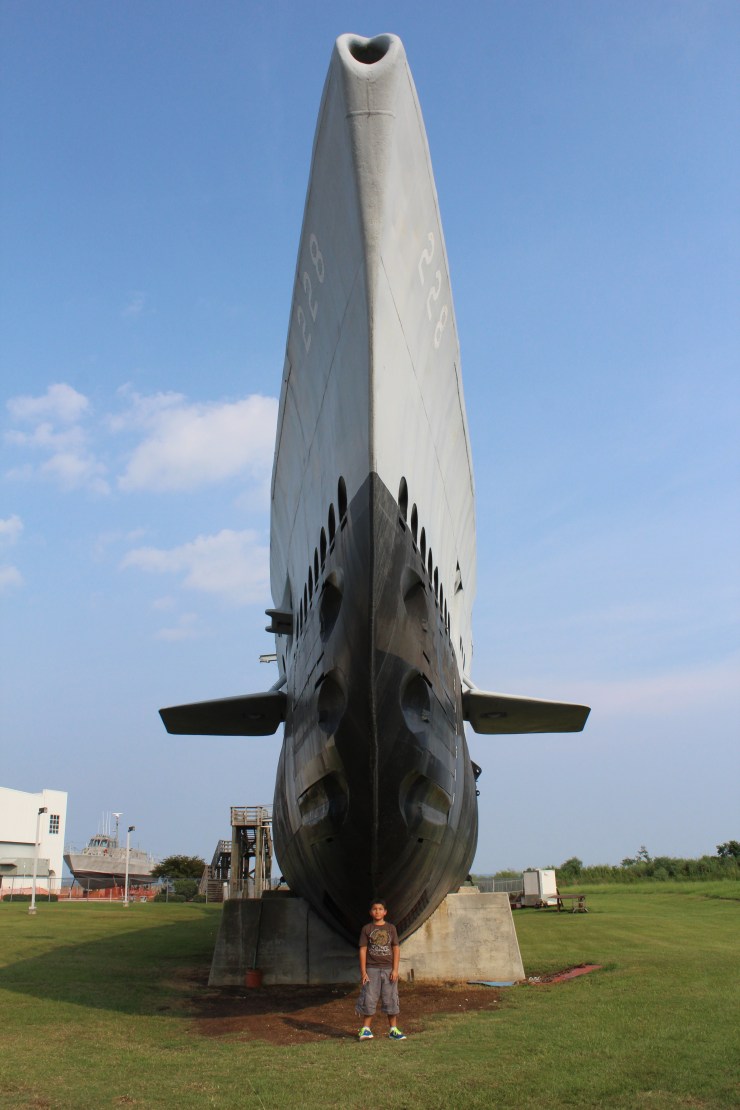
The development of the American submarine skipper, starting at the United States Naval Academy, and further refined at the Submarine School, resulted in capable leaders who were situated at a significant point in the evolution of naval warfare. These officers proved to be critical participants in the successful efforts to defeat the Imperial Japanese Navy and merchant fleet in an aggressive and successful submarine campaign in the Pacific Theater of Operations in the Second World War. With little in the way of formal professional instruction on leadership, the graduates of these two institutions were instilled with the concept of leadership through obligation. Working from the template of experiential learning before it became a concept espoused by contemporary leadership education, the success of the skippers was the result of practical mentorship and the shared desire of their peers to succeed through cooperation and initiative, regardless of the obstacles and challenges.
Bibliography
Primary Sources
Annual Register of the United States Naval Academy, Annapolis, MD September 26, 1930, Washington D.C.: Government Printing Office, 1930. Accessed June 25, 2017. https://archive.org/details/annualregiste19301931unse.
Annual Register of the United States Naval Academy, Annapolis, MD September 25, 1931. Washington D.C.: Government Printing Office, 1931. Accessed June 25, 2017. https://archive.org/details/annualregiste19311932unse.
Annual Register of the United States Naval Academy, Annapolis, MD September 29, 1934. Washington D.C.: Government Printing Office, 1934. Accessed June 25, 2017. https://archive.org/stream/annualregiste19341935unse#page/n7/mode/2up.
Annual Register of the United States Naval Academy, Annapolis, MD September 24, 1937, Washington D.C.: Government Printing Office, 1937. Accessed June 25, 2017. https://archive.org/details/annualregiste19371938unse.
Barnes, Robert. United States Submarines. New Haven, CT: H. F. Morse Associates, Inc., 1944.
Brown, Ernest W. “The Human Mechanism and the Submarine.” USNI Proceedings 66, no. 10 (1940): 1608-1613. Accessed June 25, 2017. https://www.usni.org/document/brown-ernest-1940-66-11-453?magazine_article=46176.
Denig, James L. “Food – Hawaii’s Vital Problem.” USNI Proceedings 66, no. 11 (1940): 1454-1460. Accessed June 25, 2017. https://www.usni.org/document/denig-james-1940-66-10-452?magazine_article=46078.
Duff, Ivan F. Medical Study of the Experiences of Submariners as Recorded in 1,471 Submarine Patrol Reports in World War II. Washington D.C.: Bureau of Medicine and Surgery, Navy Department, 1949. Accessed June 25, 2017. https://www.maritime.org/doc/pdf/duff.pdf.
Felsen, Henry. He’s in Submarines Now. New York, NY: Robert M. McBride & Co. 1942. Accessed June 25, 2017. https://ia601303.us.archive.org/12/items/HesInSubmarinesNow/HesInSubmarinesNow.pdf.
Hamilton, James. “Battleships.” USNI Proceedings 66, no. 8 (1940): 1130-1137. Accessed June 25, 2017. https://www.usni.org/document/hamilton-james-1940-66-8-450-0?magazine_article=46045.
Mahan, Alfred Thayer. Naval Strategy. Boston: Little, Brown, and Co., 1911.
“Professional Notes.” USNI Proceedings 65, no. 12 (1939): 1791-1818. Accessed June 25, 2017. https://www.usni.org/document/professional-notes-1939-65-12-442?magazine_article=45937.
Rossell, H.E. “The College, the Technical School and the Naval Academy.” USNI Proceedings 56, no. 2 (1930): 123-131. Accessed June 25, 2017. https://www.usni.org/document/rossell-he-1930-56-2-324?magazine_article=40098.
Schilling, C.W. History of Submarine Medicine in World War II. New London, CT: U.S. Medical Research Laboratory, 1947.
“The Development of Japanese Sea Power – ‘Know Your Enemy!’” ibiblio.org. 1945. Accessed June 25, 2017. http://www.ibiblio.org/hyperwar/USN/ref/KYE/CINCPAC-93-45/index.html.
The Lucky Bag 1935 – Annual of the Regiment of Midshipmen Annapolis, MD: United States Naval Academy, 1935. Accessed June 25, 2017. https://archive.org/details/luckybag1935unse
United States Navy. Bureau of Naval Personnel Manual. Washington D.C.: Government Printing Office, 1942. Accessed June 25, 2017. https://ia902604.us.archive.org/7/items/bureauofnavalper00unit/bureauofnavalper00unit.pdf.
United States Navy, Bureau of Ships. Submarine Report Depth Charge, Bomb, Mine, Torpedo, and Gunfire Damage Including Losses in Action 7 December, 1941 to 15 August, 1945 Volume I and Volume II. Washington D.C.: Government Printing Office, 1949. Accessed June 25, 2017. http://ibiblio.org/hyperwar/USN/WarDamageReports/SummWarDamageSub7DEC41-12AUG45/SummWarDamageSub7DEC41-12AUG45.html#SECTION VII.
United States Navy. Japanese Anti-Submarine Warfare. Washington D.C.: Government Printing Office, 1946. Accessed June 25, 2017. http://www.fischer-tropsch.org/primary_documents/gvt_reports/USNAVY/USNTMJ%20Reports/USNTMJ-200I-0244-0309%20Report%20S-24.pdf.
“Summaries of Japanese Shipping Losses During World War II by All Causes.” ibiblio.org. n.d. . Accessed June 25, 2017. https://www.ibiblio.org/hyperwar/Japan/IJN/JANAC-Losses/JANAC-Losses-2.html.
Secondary Sources
Blair, Clay Jr. Silent Victory: The U.S. Submarine War Against Japan. Philadelphia, PA: J.B. Lippincott, 1975.
James DeDrose, Unrestricted Warfare: How a New Breed of Officers Led the Submarine Force to Victory in World War II, (New York, NY: John Wiley & Sons, 2000),
Dubbs, Chris. America’s U-Boats. Lincoln: UNP – Nebraska, 2014. Accessed June 25, 2017. ProQuest Ebook Central.
Friedman, Norman. US Submarines Through 1945: An Illustrated Design History. Annapolis, MD: Naval Institute Press, 1995.
Hughes, Wayne P. Fleet Tactics – Theory and Practice. Annapolis, MD: Naval Institute Press, 1986.
Kaiser, Robert B. and Gordy Curphy. “Leadership Development: The Failure of an Industry and the Opportunity for Consulting Psychologists.” Consulting Psychology Journal: Practice and Research 65, no. 4 (2013): 294-302. Accessed June 25, 2017. https://search-proquest-com.ezproxy2.apus.edu/docview/1501369638?accountid=8289.
LaVO, Carl. The Galloping Ghost. Annapolis, MD: Naval Institute Press, 2007.
Leeman, William P. Long Road to Annapolis Chapel Hill: The University of North Carolina Press, 2010. Accessed June 25, 2017. ProQuest Ebook Central.
Lotring, Arnold and Jeff Fowler. “PCO Training: Making the Best Better.” public.navy.mil. 1999. Accessed June 25, 2017. http://www.public.navy.mil/subfor/underseawarfaremagazine/Issues/Archives/issue_05/pco_training.html.
MacDonald, Scot. “Last of the Fleet Problems.” fas.org. 1962. Accessed June 25, 2017. https://fas.org/man/dod-101/sys/ship/docs/car-evo/car-6.pdf.
Matloff, Maurice and Edwin Snell. Strategic Planning for Coalition Warfare 1941-1942 Washington D.C.: U.S. Government Printing Office, 1999. Accessed June 25, 2017. http://www.history.army.mil/html/books/001/1-3/CMH_Pub_1-3.pdf.
McBride, William M.. Technological Change and the United States Navy, 1865–1945. Baltimore: Johns Hopkins University Press, 2003. Accessed June 25, 2017. ProQuest Ebook Central.
McDonald, Craig. “The Distorted History of the USS Puffer (SS 268).” The Klaxon. 2006. Accessed June 25, 2017. https://www.ussnautilus.org/association/klaxons/2006SummerKlaxon.pdf
Moore, Stephen. Battle Surface!: Lawson P. “Red” Ramage and the War Patrols of the USS Parche. New York, NY: Naval Institute Press, 2011. Accessed June 25, 2017. ProQuest ebrary.
“Naval Submarine Base New London – History.” cnic.navy.mil. Accessed June 25, 2017. https://www.cnic.navy.mil/regions/cnrma/installations/navsubbase_new_london/about/history.html.
Nofi, Albert A. To Train the Fleet for War: The U.S. Navy Fleet Problems, 1923-1940. U.S. Washington D.C.: Government Printing Office, 2010. Accessed June 25, 2017. ProQuest Ebook Central.
Schratz, Paul R. Submarine Commander: A Story of World War II and Korea. Lexington, KY: University Press of Kentucky, 1988.
Stires, Hunter. “1941 Asiatic Fleet Offers Strategic Lessons.” USNI Proceedings 142, no. 8 (2016. Accessed June 25, 2017. https://www.usni.org/magazines/proceedings/2016-08/1941-asiatic-fleet-offers-strategic-lessons.
Sturma, Michael. Death at A Distance. Annapolis, MD: Naval Institute Press, 2006.
Watterson, Rodney. 32 In 44: Building the Portsmouth Submarine Fleet in World War II. New York, NY, USA: Naval Institute Press, 2011.
Discover more from milsurpwriter
Subscribe to get the latest posts sent to your email.


Reblogged this on Dave Loves History.
LikeLiked by 1 person