Dave posed a Twitter thread which I found as interesting as it is relevant in today’s world…
Is the tank dead?
The funny thing is, my son and I just had this very conversation two days ago.
The last sentence says it all:
No, the tank is not dead, yet. But the tactics, techniques and procedures as well as training and logistics has to be rethought and in some cases, reformed.
In response to the points made:
1. The tank is certainly vulnerable to the fire and forget weapons and also to drones. The top-down kill sequence is making tank survivability a conundrum as the top armor is generally the weakest.
Countermeasures beget counter-countermeasures in a perpetual cycle of military-industrial research, development, and profit. There already are efforts to negate fire and forget weapons, and drones… well, their vulnerability will be in their reliance on the electromagnetic battlefield; negate the drones and the armor runs rampant on the plains… for whomever R&D’ed for profit and survivability.
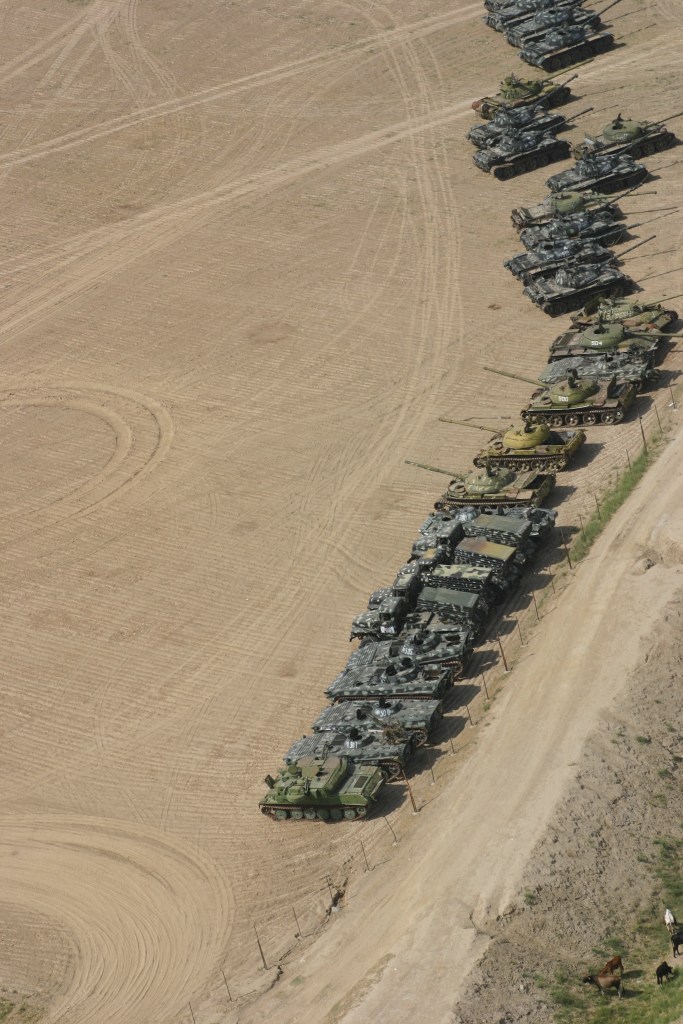
2. Explosive Reactive Armor (ERA) has seen its day. Although it will still provide protection against, the unitary warhead, tandem warheads and multiple warheads have rendered it useless. Yes, there are plenty of RPG-7s and other unitary warheads to worry about, but if ERA cannot protect against many other weapons, there is no reason to spend the weight budget on ERA let alone pay for it, secure and store it when not in combat. The problems the Russians are experiencing is partly due to the notion that their tanks all have ERA that is protecting against weapons of 20 years or so ago.
That goes back to R&D and the quagmire these newfangdangled systems/platforms are becoming. They consume money like my son consumes chocolate glazed Krispy Kremes and Girl Scout cookies. The more money which goes into the T-14 Armata, the less there is to develop next-generation ERA and whatnot… which actually slows the production process and avoids the potential for huge armor battles like Kursk.
3. Combined arms has to be rethought. Abe Delnore made an excellent point on his blog, the due to the range coupled with the fire and forget nature of modern ATGMs, dismounted infantry to clear the enemy is going to be very difficult to do as the infantry has to cover much larger areas than before; this takes time and slows the advance to a crawl.
This is an interesting aspect – once which Clancy accurately described in the Battle for Alfeld in Red Storm Rising. This was also my point that I made to him – that man-portable ATGMs were much cheaper to produce, store, and train for their employment. However, just like the Russians adapted in Chechnya, the combined armor doctrine changes as well – they started to have ZSU-23-4s accompany their armor columns in urban combat because, while the tanks could not elevate/depress their main gun enough to engage ATGM teams firing (effectively) from basement windows and rooftops, the ZSUs could – and did with brutal effectiveness. Imagine a burst from FOUR 23mm cannons firing 3,400 HE fragmentation rounds per minute at a basement window. Nightmare material for those teams, albeit very brief nightmares.
4. APS (automated protection systems) is imperative and may be the solution to the modern fire and forget ATGM. But can all armies afford it? The modern tank is already very expensive, APS makes it more so. Also, APS or some integrated and automated air defense is going to be needed to fight the drones, especially the “suicide drone.” This will a constantly evolving measure/countermeasure/counter-counter-measure issue.
There you go… I didn’t read the whole thing before I opened Word and started breaking it down while I had time… Price of APS, reliability, secondary unintended consequences of use (APS would make dismounts vulnerable if they are anywhere near the tank)… which goes back to combined arms doctrine. However, if it is successful in employment… the value of armor increases exponentially because everyone else stopped at “Step Two: buy tanks,” right after “Step One: research and develop tanks.”
5. The heavy force is still necessary for offensive operations, especially the counterattack. This may not be apparent yet to many, but although the Ukrainians have slowed the Russians to crawl, if not outright stopping them through the use of rigorous point defenses and constant infantry anti-armor ambushes, they do not possess the combat power to push the Russians out. They can conduct local counterattacks, but they do not have the ability, in my opinion, to conduct the full counter-offensive necessary to expel the invaders. Their tank heavy force is even older than the Russian’s heavy force. I don’t think there is anything that can replace the tank for this mission.
Bingo. The tank remains the equivalent of Hannibal’s elephants… for now. The tank, unlike the elephant, can and will evolve much faster as speeds are increased, armor becomes lighter and more impervious to 120mm sabots, and doctrine… DOCTRINE… is ALLOWED and ENCOURAGED to evolve to meet the next potential threat. Remember Shinseki? The dolt who wanted to get rid of tanks altogether in the late 90s/early 2000s? He retarded doctrinal development due to political points; in doing that, he frustrated the next possible Patton and created the societal and organizational doubt as to whether or not tanks would remain viable… and we are STILL dealing with that [looks for Marine Corps armor units].
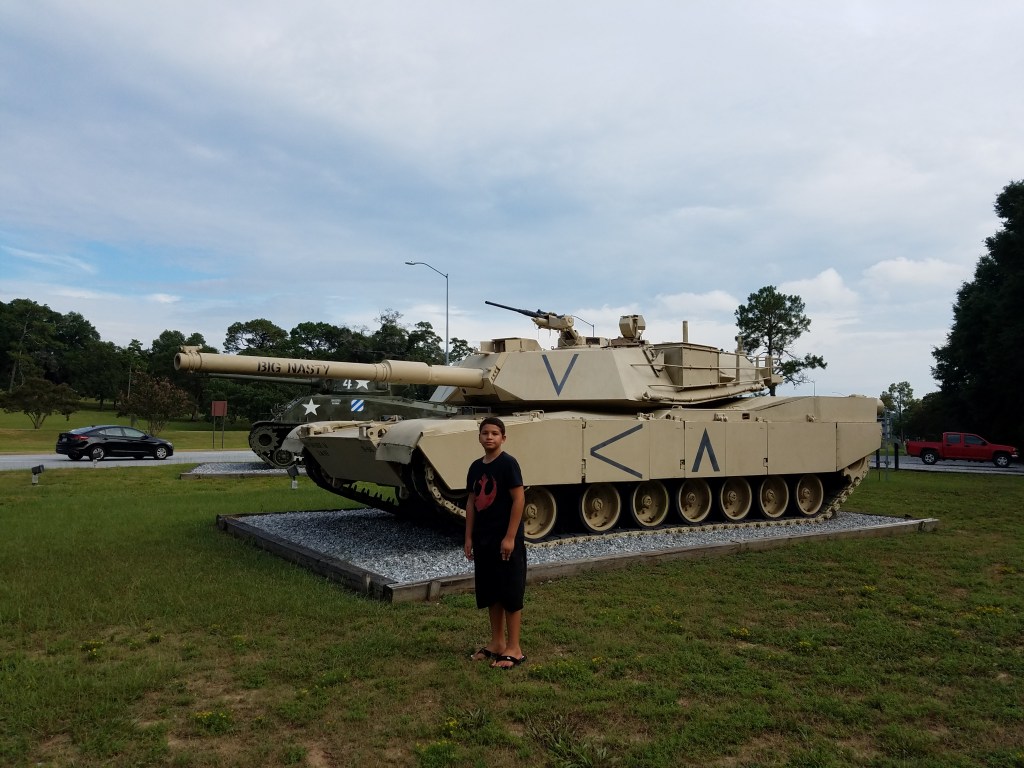
6. Logistics is everything. A force must have a robust logistics system in place and the challenge, more so than ever, is protecting the MSRs (main supply routes). As an advance goes forward, the tail gets longer and more difficult to protect. The US experienced this in Iraq and Afghanistan. This is likely the toughest problem to solve.
Ah… the whole “it’s-too-difficult-so-ditch-that-requirement” approach. Yeah. Utter failure for those who adhere to it. Tanks anchor advancements until the logistics can catch up. Yes, they consume a LOT of fuel and munitions, but… okay… what doesn’t these days? Logistics will continue to dictate the battle more than most people think, and getting rid of the bigger variables will NOT change the logistics train… in fact, it will do the opposite by encouraging faster advancements which WILL outpace the trucks, sail, and rail which supply it. So… what have been the advancements in those areas? Since the answer inevitably involves computers, I will only ask one question: how effective was NotPetya against Maersk a few years ago? And… our current peer adversaries have been demonstrating adeptness at what realm of warfare over the last decade? Russia? China? Yeah. This is why I am teaching my son land navigation and how to get from point A to point B with only a map… and why they had BETTER bring back celestial navigation for our folks in the Navy.
7. Thermal sights are imperative, and they must be good ones. One wonders how many thermals the Russians have on their tanks. The Soviets and then the Russians, lagged behind the West on night vision equipment and have relied on foreign sources. Night vison is expensive, were they able to afford it for most of their force? Thermals will help spot the infantry in hide positions. But to do so means one has to stop and scan, and thus the advance slows. So maybe put drones out ahead of the column?
Thermals can be fooled on the cheap. Saturation – my favorite word for the last few weeks, though it has been more about cyber/information warfare.
8. Training, training, training! Modern warfare is too fast, lethal and complex for ill trained soldiers to conduct, let alone survive in. And you can’t have dummies and idiots in the combat arms. This actually was becoming apparent in WWII as the US Army learned by late 1944. The dimwits simply get killed on the modern battlefield and thus make their squad; crew etc. vulnerable. And no matter what, the soldiers must be well trained and constantly trained. The days of calling up conscripts for a year or two and barely training them are long gone. Gunnery training from shooting one’s rifle up to the most complex crew served weaponry must be done often… but it is expensive. Staff training and exercise, especially logistics exercises must be done. Combined arms teams must train together. Much of this is already known, but we are seeing what happens when you pay lip service to training or worse, embezzle the funds earmarked for training.
You can have conscripts and there have been dimwits on the battlefield – the Soviet Union wasted a lot of their guys with bad soldiers and leaders. What we are seeing now, and what we will see if we ever get dragged into a kinetic war against Russia or China will be a Clash of the Doctrinally Stunted Political Hacks. Big deal – one can recite Clausewitz because they wrote papers about the guy. That’s about it… the Service Academies might have become the same as civilian academia when it comes to peer reviewed by the same peers that one reviewed. Think outside the box? Then one very well might be canned due to political unreliability.
Again, the issue of funds for live-fire training, movement training, ect., can be and have been overshadowed by the buzzword-bedazzled weapons platform du jour. I’m on a roll and can’t risk losing my momentum, but do a search for the top 10 most expensive weapons systems of the last decade or so and try not to develop Tourette’s when you consider how much individual and unit training were lost for something that was cancelled because of politics.
9. Professional, capable and stern NCOs are imperative. This was noted way back in the 1970s as a weakness in the Soviet force. The Partnership for Peace program started in the 1990s to train and reform the old Warsaw Pact armies has paid dividends. A major part of that was teaching these armies about NCOs, and how to train them. This was all open source. The Russians paid no heed to this and are now paying the price.
Russians are a different culture and, therefore, their professional military education systems and standards are going to be MUCH different from ours. Perhaps they are paying the price, or, perhaps they are fighting pretty much the same way they have always fought – victory regardless of attrition. How does the old saying go? If it’s stupid, but works, then it isn’t stupid. Well, in this case, it is stupid across the board… but there is no other cultural way.

10. Autonomous combat vehicles are coming. Why put a crew in a tank when a computer can do it for you? If anything will “kill” the tank as we know it today and relegate it to the annuals of history as the cavalry horse, it is this.
This would be a complete nightmare. Not Skynet-AI-singularity nightmare, but in the sense that we have yet to develop something which can rationalize and act on loose “Ground Commander’s Intent” or quickly changing tactical situations. ACVs… yeah, I can see those having technical issues at the worst possible time and becoming the academic fodder for future students of martial arts to write papers on.
As for the final note about the “demise” of the cavalry horse, consider this:
Right at this moment, there is a Cossack on a charging steed with a carbine… headed right at you. By the time you would finish this paragraph, if you could unscramble the train wreck of thoughts to react, you could easily be overrun and run through with a saber. Calvary, much like the tank, remain as examples of primal psychological warfare… and the sort that makes one break for the horizon in a full-on and defecating sprint.
No, the tank is not dead, yet. But the tactics, techniques and procedures as well as training and logistics has to be rethought and in some cases, reformed.
A continuation of this idea has been brewing over the last two days…
Now, before I continue, I must make a few points painfully clear:
I am not a budget analyst. There are nuances and levels beyond the echelons of reality which befuddle and confuse beyond the ability of pedestrian attempts to make any sense of governmental spending – discretionary, entitlement, or mandatory.
Writing on these matters is more of a pastime than anything else. Discussions of financial implications on acquisitions or doctrine are not official here in ANY way and serve only to offer a consideration as to the social, economic, industrial, and foreign policy possibilities/considerations which are interpreted by me – the average taxpayer and student of history.
On 18Feb22, I wrote “The Cost of a Tweet” as I considered how the digital campaign in information warfare might be looked at from a different perspective. While cost wasn’t the only consideration, an understanding of the training, logistics, research and development, countermeasures, and effects of digital versus physical weapons was my main intent for that post.
This wasn’t the first time I had broached such a larger topic – “Untenable” from 2Sep19 focused on historic examples of prolonged combat and a nation’s manpower pool… While “A Very Necessary Evil” on 9Aug21 looked at the justifications for the use of the atomic weapons against Hiroshima and Nagasaki at the end of the Second World War sought to be the final effort to close a long-standing conflict where economic and logistical warfare was waged against the people and country of Japan.
Talk of war is presently inescapable, these days. Now that everyone can retire their lab coats as “armchair epidemiologists,” they have donned the BDU blouse of authority – the one which is pressed with the steamy weight of their own limited understanding of very complex and interdependent factors and starched with the residue of their own perceived self-importance. If you read the word “steamy” and immediately conjured up the most picturesque turd in your mind’s eye, we can have a Scotch together…
However, as with my own thoughts, nothing in warfare – the justifications, financing, execution, and repercussions of – are NEVER simple and cannot be reduced to comfortable and absolute statements regarding the end of practical application. After all, lead is basically a material thrown – the only difference between a rock and a 62-grain projectile is, effectively, velocity.
I write on conflict not to glorify it, but to understand the interwoven networks and relationships between distinctly different elements of the human environment. Perhaps it is to attempt the effort in understanding it… possibly it could be viewed as a way to anticipate and mitigate it from being the most likely course of (failed) diplomatic action. Maybe, I write as a way to document my thoughts and concerns to future readers as a way for them to understand that I am starting to see a trend that only they will be able to fully realize: that I was right when I really do NOT want to be in terms of where I see things going.
Who knows?
In the meantime, I shall continue on with my observations in search of that signpost which indicates that our dissonant capacity for self-destruction continues to be effectively balanced by our own desire to become better than who we were the day before.
Discover more from milsurpwriter
Subscribe to get the latest posts sent to your email.
 milsurpwriter
Reblogged this on DAVEBOOK and commented:
I was absolutely fascinated by the realization that so much of our non-professional thinking is still stuck in the Combined Arms doctrine of 1945. Clancy had it right in red Storm Rising, the proliferation of light guided munitions has really changed things.
Mike has far better analysis…
LikeLiked by 1 person