I have been working on variations of this unintentional series over the last few days with little progress beyond several unrelated Word documents where one thread has faded and a different direction is pursued…
One of the biggest obstacles for coherency is the fact that I keep coming back to a few ideas which I have previously hinted at/indirectly referred to. Perhaps it is my love for transcribing the thoughts in my mind with little consideration of whether or not my point could have been made a bit more succinctly. It might even be my deliberate care not to alienate or offend the limited audience I enjoy; this idea is challenging in that, if you have made it here, you probably aren’t the type to easily get offended.
Whatever the motivation, perhaps it is time that I post something a bit more direct about where I think we are headed and what that means for the 4- and 15-year-olds and beyond:
Digital Probing
We did not learn our lesson over the last decade or so.
We should have in 2016, when 3,500 advertisements and a total expenditure of “approximately $100,000” consumed our national media cycle.
We should have in 2017 with the NotPetya attack on Maersk indicated how vulnerable logistics are.
We should have every… single… year it has become more clear that our weaknesses were being explored and catalogued for future exploitation.
We didn’t. Obviously. And when whichever major adversary decides to digitally grab us by the short and curlies and insist that we mind our business in Ukraine, Taiwan, or wherever… an angry electorate will demand that whatever it is that shut off the electricity or shut down the logistics to the local big box store or Starbuck… whatever or whoever NEEDS to be placated by whatever means necessary.
Erosion of National Cohesion
Ah… another point of weakness we have been so eager to showcase. Our reliance on media (yes, both social and traditional) to replace whatever critical thinking skills we might have once had… yeah, that has turned us into reactionary puppets of identity, political affiliation, or many other biases we wrap ourselves in… to the point of ethical and moral asphyxiation.
My son sent me an article on the restart of the Russian Tu-160 a week ago, and in a subsequent discussion on this with Dave, my observation was terse:
Money pit. I would be investing in cyber… heavily.
“If you know a weakness exists, exploit the fuck out of it.”
-Me
Self-sufficiency – emotional, industrial, and whatever
The word “offended” has moved into the top few list of trigger words for me.
“Navy should be ‘offended’ by its own maintenance and manning faults, admiral says” was a headline that pissed me off so much that I couldn’t focus on the content of the article.
Our national reality seems to be one in which the existence of one needs to be consistently acknowledged, massaged, and accommodated by everyone else… otherwise, we get… we take… Our fucking feelings get hurt like the crybabies we created.
On the industrial level, yeah… that’s kind of obvious to most – if you have no leverage on the raw materials, the sea lines of communication, the manufacturing, and follow-on support, then… well, you ain’t got much of a leg to stand on, globally… and neither does your currency.
Politics
No. If you haven’t been paying attention, there is no point in wasting my time with you. If you have, and expect some sort of salvation in the 11th hour, likewise, there is no point in wasting my time with you, either.
AND if you have been paying attention, then you fully understand why moving on with only an ellipsis is appropriate.
…
I posed a question in a comment thread about Twitter not too long ago:
I cannot help but ask:
… Then what?
I had illusions that I could walk away from Facebook… yet all I did was relocate from a platform/publisher with much engagement to one of sporadic discussions and a feeling of wary exhaustion…
Even with Gettr, I pose a similar question: then what? So we move to a different platform/publisher who can be bought and sold… taking our digital connections with it? So the naysayers can target this new digital commons the out of fear and disdain much like they did with any other alternative to Facebook and Twitter?
Don’t get me wrong – I have done the same thing as you, though I did not leave with such an eloquent epitaph… At best the last Facebook post was an hour of Cisco wait muzak… Then I quietly deactivated my account 6 months later.
However. I pose “then what” because I think your commentary might resonate with not only me, but with others…
What followed was one of the better discussions I have had on the topic for a while:
“What is it you expect from social media such that there is a ‘then’?”
Me:
Times like these and comments like this are those which sorta become the answer in and of itself – the “then” tends to be whether or not exchanges like this change a perspective or fosters more questions or introspection. Perhaps the “then” I hoped for was how we might be able to use the tools of social media to truly cross border and boundary – political, philosophical, and ethical.
Instead, we are left in a war where the primary weapons are blamethrowers, and our fortresses are the ideological ramparts surrounding our echo chambers.
As cynical as I can be, there was (and still is… I have moved from being a cynic to a vicious optimist) hopes that we would become better.
Silly me – even as a student of history and in light of my recent reading of the origins of the Armenian Genocide, I have misplaced my idealism with flights of fanciful loftiness.
What was Twitter (and all of social media) supposed to be in my mind was a better printing press… an improved telegraph… the new radio… and perhaps it is… but like Hearst, Pulitzer, and Goebbels, the tool has shown that it can also be a weapon.
I wished it wasn’t the case, but “if wishes wishes were horses, we’d all be eating steak.”
“…there’s been this pervasive belief that computer technology was A) completely unlike anything that had come before, and hence none of the old rules applied, and B) was going to make the world better.”
[Added for context]
“It was never entirely clear how that would be, and I always imagined the ridiculousness of that as a label on the box that humans came in: JUST ADD COMPUTERS.
So much clearly avoidable foolishness.
Many, many times now I have mentioned this to someone, often in vain: Whether it’s a simple torch or an atomic bomb, whatever tool we create, the hand that holds it is still a human one.
Our tools don’t make us better. They merely extend our reach. With DNA technology, we can end genetic disease–and create world-ending plagues. With a plow, we can sow a field–or turn our neighbor’s land with salt.
There was this kind of religious myth, forged in the Enlightenment, that said progress was not only good, it proved that those of us lucky enough to occupy the present were better than all who had come before.
Two and a half centuries later, we still teach this myth to children. Your example of the printing press is on point. We only tell one half of the story, the good half. We fail to mention that the printing press underwrote the Reformation and all the wars of religion in Europe.
Every eugenics “textbook,” every propaganda poster, every article of yellow journalism (which is hardly the invention of our era), and all the rest are also children of the printing press. Why does it get a pass?
We’re like athletes who, when they score, blame God, but when they don’t, blame themselves. If progress is noble, then the printing press, as an agent of progress, can only be blamed for the good it did. Everything else was somehow our fault.
But please understand, I’m not a Luddite. I’m not opposed to progress. (I don’t think you could stop it anyway.) I just prefer not to have any illusions about what it brings, or what it looks like in the moment. It’s often brutal, like the industrial loom that rips limbs from the children paid pennies to mind it.
Social media, or at least the internet generally, probably IS the new printing press. You’re not wrong there. You were just sold a myth on what the printing press actually was.
Problems arise. They’re inevitable. The Second Law sees to that. I genuinely think most people believe it’s possible to create a world where big giant problems are rare. The evidence is not in their favor.
BUT… problems, while inevitable, are also generally soluble. Social media, like climate change, is a fairly new one.
Not that I’m counting on human ingenuity to save the species. Any one of these issues that come up could be the one that ends us. That seems to be part of being born into the world. 99.9% of all species that ever lived have gone extinct. We are very unlikely to be the exception.
Still, if I’m honest, I have to admit the record so far is pretty good. For a while there, we were fixing to blow everything up. Anyone not amazed by the systems of checks and audits that underwrite the numerous disarmament treaties, or who is not astounded by the complex array of infrasound detectors around the globe that help enforce the Comprehensive Test Ban Treaty, isn’t paying attention.
There is an almost surreal amount of work, mostly carried out by transnational organizations, that work constantly against global Armageddon using tools that took decades to evolve and implement as solutions to what was once a novel, seemingly intractable problem.
(Not that we’re out of the woods on nuclear weapons. As hard as it was, it’s still much easier to maintain detente in a bipolar versus a multipolar world. But still, let’s at least recognize we only had the Cuban Missile Crisis once.)
It would be nice if our problems were being addressed responsibly, but of course they’re not and never have been. Ecclesiastes has some wonderful lessons there.
But if I were a betting man, I would bet that over the next 20 years, we’ll gradually come up with mitigations for the worser effects of social media. But I would also bet that social media, like the printing press, is always going to be something of a mixed bag.
After pouring in a healthy dose of computers, we’re still human, it seems.”
Me:
When this pandemic or whatever it was/is becoming first started out, I wrote “Pandemics and Social Media” as part of my reaction to the convenient – but flawed – comparisons to the 1918 Spanish Influenza outbreak (among others).
As it turns out, I don’t think any comparisons between the past and today hold water like many folks would think they do… because things are truly never the same; different variables, different social norms, and different tools.
“…Our tools don’t make us better. They merely extend our reach.”
Absolutely. Over the years, I have watched the growing encroachment of technology in our daily lives with a sense of morbid fascination: while these tools are amazing, what would someone like Stalin, Hitler, Mao, or Pol Pot do if they had access to this much real-time information on the people they sought to control?
Never far from my mind would be the blunt statement/response: just wait. It is always a matter of time for the next tyrant to arise, though most folks living in the days leading up to tyranny never received a clear warning of what was to come.
History never has a clear “You are Here” indicator – never has, and never will… which is going to be extremely painful to those who have gotten comfortable in not paying attention to the rhythm of human existence.
“It would be nice if our problems were being addressed responsibly, but of course they’re not and never have been.”
There are times when we surprise ourselves and create the foundation of something which grows into something much different than we thought in positive terms. The Constitution and Bill of Rights effectively addressed the issues of the late 18th century and still amaze me when you think of how vital the intentions of men long ago were to what America has become…
However, nothing retains the original intent and is shaped by time to either grow into something better or devolve into something useless… This is just the way things are and always will be.
“But if I were a betting man, I would bet that over the next 20 years, we’ll gradually come up with mitigations for the worser effects of social media.”
I love it… but I would not take that bet. One thing I have realized over the last two years is that I COMPLETELY underestimated the pliability and willing ignorance of folks. Make a car touted as “safer” and you’ll encourage more recklessness and inattention in drivers… path of least resistance, really.
Do I think there will be some formal mitigation of the perils of social media in the next decade?
Sure.
Do I think that those efforts will be harmful to some and a tool of quick and complete control?
Sure.
Do I think that we will always find a way to continue on like a clumsy toddler in a house of cards museum?
Sure.
What does this mean for the next generations?
You’ve read this here before: I cannot predict the future, nor is history a template for how things will pan out – especially considering that we have never had these tools at our disposal before.
For some, it might suggest a future of fear and directives.
For others, it might be a future of fanatical resistance.
…For me, it means a future where my current imperative is to give my kids the tools they will need to navigate whatever the future brings: resiliency… emotional self-sufficiency… critical thinking… compassion… and an understanding that they alone will be responsible for their successes, failures, and attitudes about everything.
Maybe not today, maybe not tomorrow, but soon, and for the rest of your life.
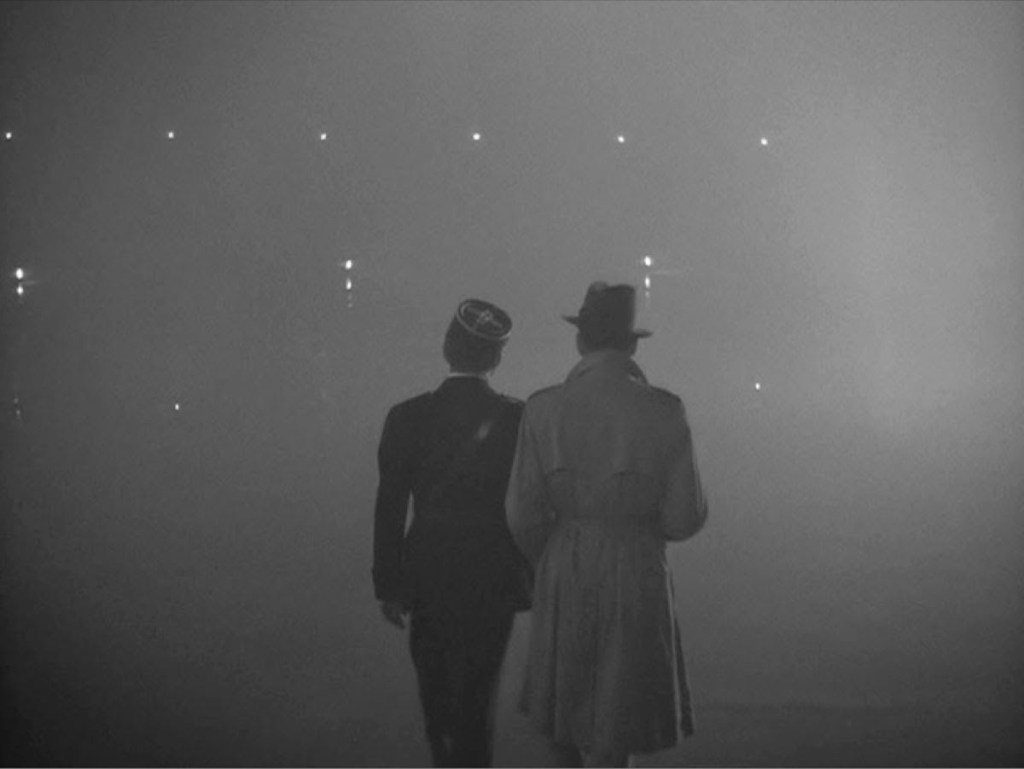
Viciously Optimistic.
Discover more from milsurpwriter
Subscribe to get the latest posts sent to your email.
 milsurpwriter