Have you ever been on a helicopter that you were scared to death, closed your eyes?
Edit: this answer is mostly intended for folks familiar with rotary-wing flight, but I will make every attempt to include enough information to make it understandable to other audiences… so please bear with me.
“Scared to death?” Sorta… but to the point where I shut my eyes to avoid the reality of the situation? No.
Over the course of my time as a crewmember on UH-60’s, I logged 3,904.9 flight hours as a crew chief, flight instructor, and standardization instructor. In each of these roles, my duties necessitated actions in conjunction with those of the other crewmembers in a variety of missions – support, medical evacuation, resupply, and – most interesting at times – training. Of all those types of flights, the training flights proved to often be the most dangerous at times.
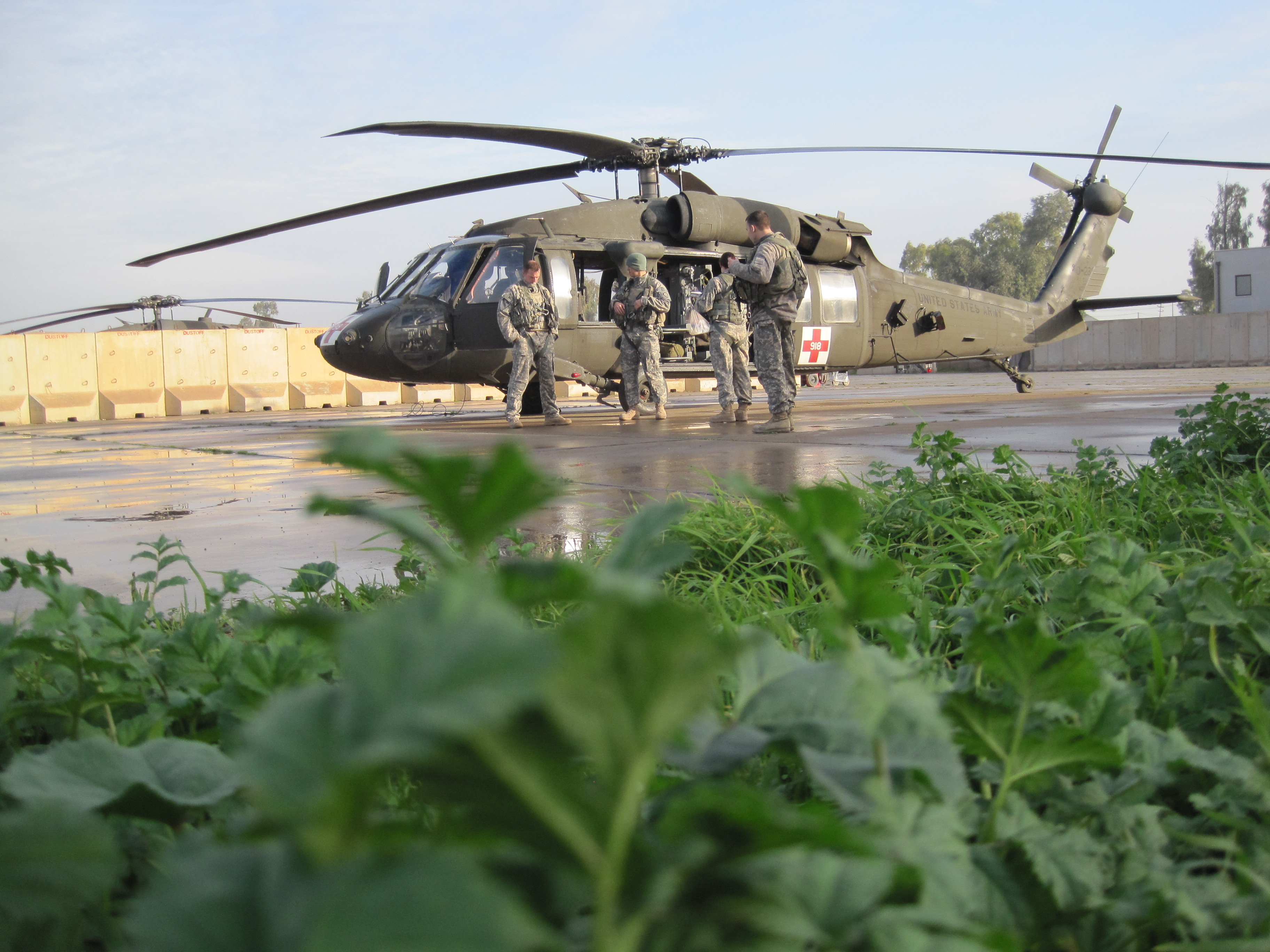
Emergency procedure training was often the periods of most personal stress. Whether it was when the hydraulic assistance to certain flight controls was disabled during “boost off” training and evaluation or simulated loss of both engines, necessitating entering an autorotational descent, these events frequently brought both pilot (“front seaters”) and crewmember (“back seaters”) out of their very large comfort zones with a speed directly proportional to the capabilities of the person on the controls.
With boost off, the control inputs made by the pilot on the controls were frequently described as “mushy” with a bit of a delay between what is done versus what actually happens. A good analogy would be to compare it to driving on ice – while you may manipulate the wheel one way, it takes a bit of time for the car to do what you actually want it to do… and in a rapidly changing environment, that delay comes across as drunken on a good day and expensive on a bad one. At best, the most damage sustained would be a broken tailwheel lock pin, which keeps the tail wheel from drunkenly castering like an annoying shopping cart; at worst, uncorrected lateral drift could place the helicopter into a roll once the main landing gear contacts a surface of sufficient friction.
Autorotational descents were fun when the doctrine was well-established and the pilot on the controls was adequately seasoned. However, when the former changed to include turning and low-level autorotations… and combined with relatively low-time pilots not entirely comfortable with either their abilities or the concept of the maneuver, things became… sporting.
The basic idea of an autorotation is that, pending the loss of power from one (or both, depending on aircraft configuration) engines, the controls are manipulated to initiate a descent with a vertical speed sufficient to increase the rotor speed to about (or slightly above) what it would be with the engines operational. As the helicopter nears the desired landing area, the pitch of the main rotor blades is progressively increased to slow that vertical speed so that, ideally, the rotor system would begin to aerodynamically stall just as the helicopter is gently touching down.
For autorotations, the closest I have ever been to closing my eyes were the times when the person being evaluated or trained on low-level autorotations either delayed in arresting the descent or over compensated by pulling the nose up too high while we were too low – bringing the stabilator far closer to the ground than I liked. On occasions like these, my polite-but-terse after-action-review comment would be something along the lines of: “The static discharge wicks are NOT curb feelers…” However, in writing this, I perversely miss the distinct sound of the main transmission whining as we started to decelerate – sort of a skipping screech as drivetrain and power train struggled to reconcile their differences and get along once again.
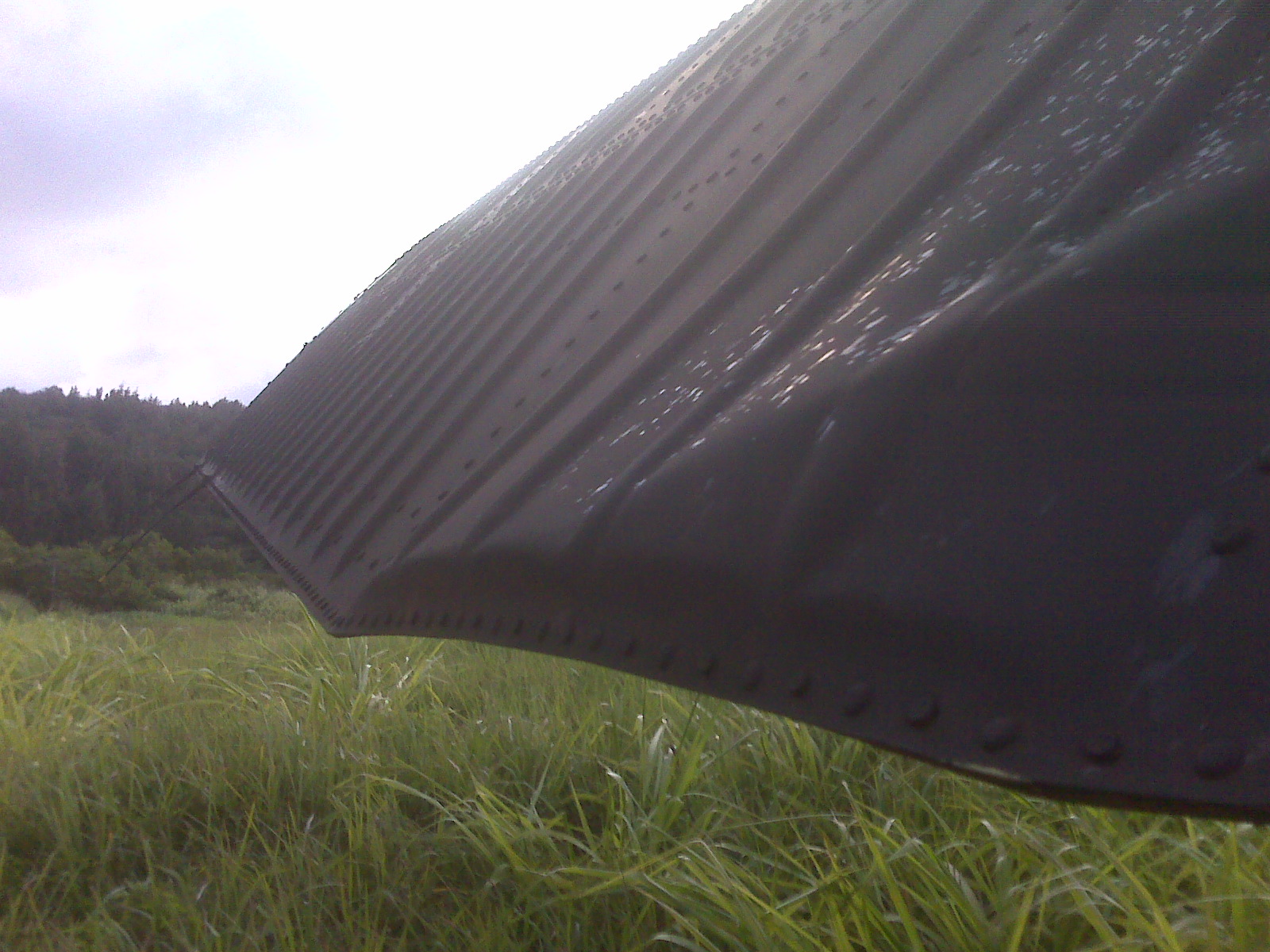
Settling with power… while I don’t remember ever being part of a crew that trained for this event, I do distinctly remember being part of a crew that experienced this phenomenon while in Iraq in May 2009. The concept, simply put, is that a vertical decent with little to no forward airspeed actually “recycles” the disturbed air back through the rotor system, and any collective input by itself increases the rate of descent. In this instance, the pilot on the controls didn’t immediately catch the situation, and as I watched the ground rush towards us faster than I had ever seen at that point, I began to calmly repeat “Down and forward, down and forward,” as a reminder that we needed to get out of this descending column of air. A combination of my prompting and the pilot not on the controls actions brought the reality of the situation to a happy conclusion.
Simulated loss of tail rotor… whether it be effectiveness or other malfunction is never a good position to be in – especially in close proximity to terrain or obstacles. In the one case where it was simulated on one of my flights around 2002, it was both close to the ground and not too far from other parked helicopters. We had just picked up to a 30’ hover, when the Instructor Pilot (IP) decided to do an unscripted and unannounced “simulated uncommanded pedal drive.” To this day, I am only slightly confident that we rotated the tail to the left (I was jerked sideways in my seat before the inertia reels stopped me from falling completely out), and we may have exceeded the published restriction of 30̊/sec for hovering turns.
Flight School XXII at Ft. Rucker is the final time which comes to mind for most intense training flights. For those unfamiliar, Ft. Rucker, Alabama is where every helicopter pilot in the Army is trained, both in their initial rotary-wing qualification and their later airframe-specific training. While there for the Non-rated Crewmember Instructor Course in 2009, we conducted a lot of our training with these new pilots… and when I mean “new,” I am talking less than 50 hours TOTAL time in helicopters, compared to the 1000+ hours for each of the other crewmembers on board.
It was one of these new pilots who put me into one of the most oddly hilarious and frightening situations in my aviation career. While performing a “rolling landing” where the helicopter touches down on one of the various stage fields in the area with no more than 60 knots forward airspeed, our budding pilot failed to keep us aligned with the runway during the approach. The situation was fairly clear to me – I could see more of the runway length through the gunner’s windows than usual, but my faith in our IP for the day was unflappable and unshakable… even after we touched down on the tail wheel and right main landing gear and started to do this crazy, two-wheel drift towards the left side of the runway.
With Yoda-like calm, our IP nonchalantly asked his student: “Now that you have gotten us into this predicament, what can you tell us about dynamic rollover?” Taking the controls, the IP got us smoothly back into the air and into a more graceful state of flight.
I laughed then, just as I smile now while I write this, but – going back to the original question about being so scared in a helicopter that I closed my eyes – these stories of my professional past reflect both a level of the perceived immortality of youth as well as the intense training we underwent to culminate in the calm and deliberate reaction to immediate and potentially catastrophic crises.
So… have I ever felt the need to shut out the world during an emergency?
What…and miss out on all the fun? Hell no.
Discover more from milsurpwriter
Subscribe to get the latest posts sent to your email.
 milsurpwriter
4 thoughts on “Fear and Hilarity”