Early in my blogging habit, I wrote about my preferred brand of Scotch (Scapa) and my perspective on its relationship with naval history. As the 102-year anniversary of one of the most disputed naval battles in history approaches, it is fitting to submit one of my academic papers for your consideration.
It was somewhat of a stretch in this paper to assert that the Battle of Jutland had something to do with the rise of the Nazi regime two decades later, but I am a big fan of causality and looking for different perspectives.
The First World War (1914-1918) resulted in changes within Europe which shaped and continues to influence the world in present times. Land and naval campaigns from a century ago remain vital lessons of war and the study of these historically significant events foster understanding and appreciation of the evolution of ideas during this critical point in human history. The Battle of Jutland May 31 -June 1, 1916 proved to be a comparatively small event in consideration of the larger implications it had for Germany’s military and society for the remainder of the war and the turbulent years following the conflict.
For much of the First World War, the Imperial German Navy formed the bulk of the Central Powers’ naval strength of and enjoyed relative successes against the British Royal Navy which carried the bulk of the maritime force of the Entente. The Imperial German Navy and the Royal Navy shared the mutual and contested goal of establishing supremacy of the North Sea and Atlantic Ocean, and the naval action of May 31-June 1 became to be remembered by the British as the Battle of Jutland and the Germans as the Battle of Skagerrak. This indecisive and debated engagement between the two fleets has become the focus of considerable analysis over the last century. However, the effects of this one event manifested themselves in other ways; from the inconclusive end of the Battle of Jutland until the Treaty of Versailles on the 28th of June, 1919, the morale and effectiveness of the Imperial German Navy was irreparably damaged and led to increased and inevitable unrest within Germany. German post-war national identity was created by the seeds sown amongst the frustrations and disgrace of the veterans of the First World War. The 1916 Battle of Jutland, with direct and lasting effects on German internal politics and society, became one of the crucial events which shaped the world’s course over the next three decades.
During the First World War, the execution of the German naval blockade of Britain and the importance of protecting Britain’s maritime trade prevented the Royal Navy from embarking upon aggressive sorties against the Imperial German Navy.[1] A dichotomy of intent occurred for both combatants – the British, restrictions of their obligation of defense, and the Germans, the limitations due to the necessity of maintaining the presence of a threat. The efforts of the Royal Navy prior to the First World War found themselves enjoying maritime superiority over Germany with the emphasis of warship construction centered primarily on speed and firepower, sacrificing operational range and the protection of armor.[2] British naval doctrine favored the effective use of reconnaissance and intelligence. The effective use of these aspects proved vital in their previous success against the Germans at the engagement at Dogger Bank on January 24, 1915.[3] Upon assuming command of the British Grand Fleet in 1914, Admiral Jellicoe placed considerable published emphasis on the need for independent tactical freedom and an overall decentralized approach to fleet command.[4]
Countering this threat, the Imperial German Navy’s focus on developing new naval weapons, doctrine, and strategy included a heavy emphasis on maritime interdiction. The First World War became the first conflict in which German U-boats demonstrated the effectiveness of commerce raiding and unrestricted submarine warfare starting initially in the early months of 1917.[5] Surface warship design, in direct competition to the growth and refinement of the Royal Navy, was plagued by the difficulties. The financial burden of the comparatively new German government at the start of the 20th century and became a political point of contention, and created an arms race against the British.[6] German naval strategic demands focused primarily on defeating the myth of the Royal Navy’s supremacy and asserting Germany’s access to the open ocean.[7] Finally, leadership changes within the Imperial German Navy found Vice Admiral Scheer assuming command from Admiral Pohl in February 1916.[8] The strategic potential of the German navy had not been aggressive or determined to that point, Scheer maintained the status quo of the Imperial German Navy in awaiting the right moment for a Schwerpunkt, or man focus of effort, against the British fleet.[9] The German fleet was successful in maintaining a strategic lead against the British through upsetting the disparity and equilibrium of power which favored the Royal Navy in size, had become fatigued by 1917. The successes of the U-boats offset the frustrations of the various skirmishes of smaller flotillas and scouting raids in the North Sea, and though these smaller battles were largely successful in maintaining pressure on the Royal Navy, the repetitive nature of such actions sapped the fighting potential of the Imperial German Navy over the course of the war.[10]

Intelligence and initiative are two of the most important factors which decide the momentum of any engagement, regardless of the geographical location of the battlefield and the size of the forces. With the German naval codes compromised as early as early as 1914, the British were exploited the German naval leaderships’ reluctance and inability to ensure communications security. Earlier sorties by the Imperial German Navy on January 24, 1915 at the Battle of Dogger Bank provide an example of the British initiative in utilizing intercepted German transmissions to meet and inflict serious, but not decisive damage to the German fleet.[11] Combined with the Imperial German Navy’s reliance on extensive wireless communications, correctly ascertain the disposition and destination of the High Seas Fleet, bestowing both the advantages of intelligence and initiative with the Royal Navy well before the first shells were fired.[12] The British Grand Fleet, commanded Admiral Jellicoe and comprised of 151 various warships set out from their anchorage at Scapa Flow on the 30th of May with partial intelligence warning of the German movement.[13] To the south, the 100 warships of the German High Seas Fleet had sortied from their anchorage at Wilhelmshaven on May 28th under the overall command of Vice Admiral Scheer with the intent to aggressively pursue and destroy commerce shipping, provoking a response from the Royal Navy.[14]
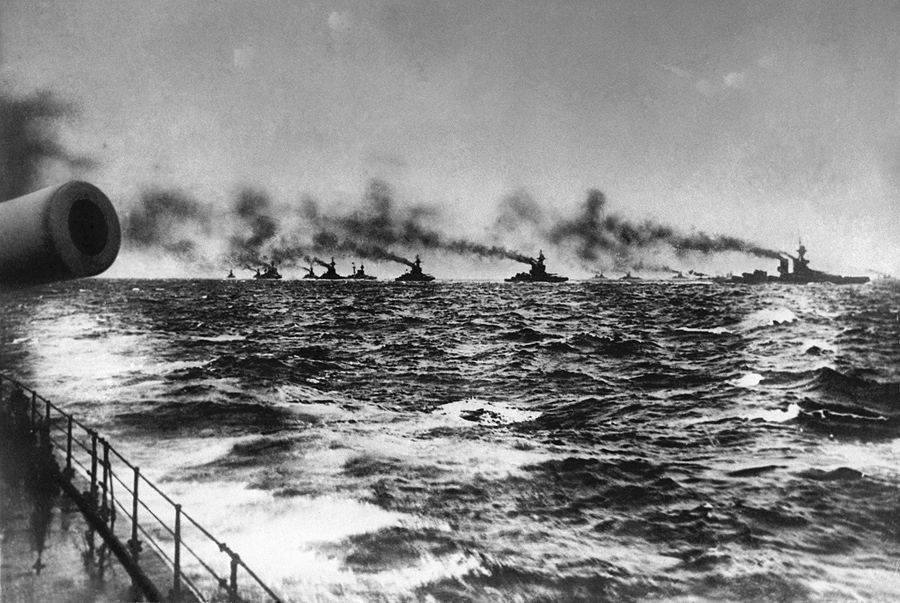
For both fleets, the initial moves in the Battle of Jutland were later reviewed to be common and mutually confusing from the perspectives of both Sheer and Jellicoe. Vice Admiral Hipper, subordinate to Scheer commanded a five-ship vanguard ahead of the main German High Seas Fleet, and established contact with British warships in the late afternoon of the 31st. Erroneously assuming the distant silhouettes to be the only opposing enemy forces, Hipper, subordinate to Scheer, maneuvered in contradiction of Scheer’s instructions to draw enemy contacts encountered towards the bulk of the German fleet. These British elements, part of the scouting and reconnaissance forces under the command of Vice Admiral Beatty, incorrectly assuming his forces to be beyond the range of German fire, initiated movement to interpose his ships between the British Grand Fleet’s axis of approach and the German ships, but his formation lost cohesiveness due to the speed and smoke of his own ships.[15] The initial German salvoes were accurate and effective, destroying the HMS Indefatigable and HMS Queen Mary and severely damaging the HMS Lion within the first hour of the battle.[16] As the range decreased, the German battlecruisers Von der Tan and Moltke were ineffectually engaged by British ships, but the damage proved to be negligible.[17]
Initial contact established, smoke from both the British and German fleets proved to be an asset and a liability to the commanders of the fleets. Plumes of dark clouds emitted by the ships indicated their presence while obscuring the dispositions and size of the approaching forces. With the advance elements retreating towards their respective main fleets, Jellicoe tried to reorganize his forces prior to engaging the German fleet, but losing the battleship HMS Invincible, the armored cruisers HMS Defence and HMS Warrior, and damage to the HMS Warspite initially of the fleets reduced Scheer’s fleet considerably. For the Germans, the first stages of the battle resulted in damage to the battlecruisers SMS Lutzöw and SMS Derfflinger, and though vital to the understrength High Seas Fleet, tactical mistakes led Scheer into the main British fleet as darkness fell.[18] Maneuvering in the darkness, the British and German fleets repeatedly attempted to find and engage each other. The reports of captured British sailors from the destroyer Nomad provided Scheer with a more accurate picture of the tactical situation, though he was unable to exploit this advantage appropriately during the night, during which time the SMS Lutzöw sank due to the damage sustained earlier in the battle.[19] The sinking of the British armored cruiser, the HMS Black Prince, though fortuitous because the ship had wandered into the path of German battleships during the early morning hours, was far from being decisively favorable for Scheer. With additional information supplied by rescued British sailors that the formidable Grand Fleet was not pursuing his forces, Scheer directed his forces to disengage and return to port.[20]

Overall the significance of the Battle of Jutland remains as disputed as the outcome by scholars and historians. For the British, the battle “broke the monotony of the naval situation” and was celebrated as a victory due to the retreat of the German High Seas Fleet.[21] Supremacy of the North Sea was not lost by the British, and Germany’s High Seas Fleet had not achieved the goals of dominating the Grand Fleet.[22] The Battle of Jutland had created legendary figures of the sailors and leaders who had participated in the conflict; individual accomplishments were heralded as the finest examples of civic duty, and the influential presence of Jellicoe was sought to provide inspiration and resolution to shipyard labor issues.[23] Similarly, the German High Seas Fleet received national praise in their successes against the British and official versions of the battle chided the tactical failure of the British to press the attack, despite favorable odds.[24] The raw numbers of losses supported the German assertion of victory: the British sustained the losses of 3 battlecruisers, 3 armored cruisers, and 8 destroyers, whereas the Germans lost one pre-dreadnought (early battleship), one battlecruiser, four light cruisers, and five destroyers. However, the damage to substantially more German warships hindered the tactical or strategic effectiveness of the Imperial German Navy, significantly.[25]
The Battle of Jutland had lasting effects for Germany, aside from the inability for their naval operations to directly contribute to the outcome of the First World War. Despite the claims of success, the morale of the sailors of the Imperial German Navy declined. Once a proud arm of the German national military strength which asserted itself against the historically dominant Royal Navy, the combined losses of the German military in 1918 became one of many sources for the unrest and turning of opinion. Though not part of the Battle of Jutland, the fleet based at Kiel harbored resentment at the outcome of the battle and the rumors of one last suicidal sortie against the British resulted in a breakdown of military order and discipline in late October.[26] With this precursor to the problems Germany was to face, the ensuing turmoil following the Armistice engulfed Germany in social and political conflict, and the later creation of the post-war Weimar Republic created the conditions for the rise of the National Socialist German Workers’ Party, or Nazi party during the two decades following the war.[27]

An analysis of the Battle of Jutland itself, offers an understanding of the transitional period that the First World War represents in several aspects. Two noteworthy naval strategists, Alfred Thayer Mahan (1840-1914) and Sir Julian Stafford Corbett (1854-1922), provided the guidelines of the theory behind the British and German efforts in the North Sea and Atlantic Ocean during the First World War. Mahan’s 1911 book, Naval Strategy, formulated the relevance of historical analogies in contemporary modern naval warfare, and like Corbett’s work, served as examples to naval leadership on the conduct of war. Manan’s “principles of war” included the warnings against the employment of naval forces in a defensive sense.[28] Though the strategic positioning of the British and German fleets more resemble Corbett’s theories of a “fleet in being,” his theory of awaiting the proper opportunity for commitment of strategic or tactical action to be successfully exploited, the British and German naval forces essentially waged a defensive contest for much of the First World War.[29] Mahan and Corbett warned against the perils of wireless communication, as well. The former, cited wireless technology to provide information to friendly and enemy elements alike – specifically with the reminder that it would “be safer to send a vessel with good tidings than commit them with air waves.”[30] In the case of this one battle, the misappropriated application of available technology fostered overconfidence and the ability to micromanage on the tactical level which resulted in successive failures to supply critical intelligence to the German fleet at the Battle of Jutland.[31]
Confronting a maritime empire, Germany faced considerable challenges in asserting their military will upon Britain. Corbett highlighted the importance of a coherent national effort on the political figures as well as the civilian and military elements of a nation.[32] Jellicoe’s failure, in this case, stemmed from the initial stages of his command of the Grand Fleet in 1914. Initially advocating decentralization, his published Battle Orders contained contradictions of theory and intent.[33] The post-action contention between Jellicoe and Beatty illustrates this inability for the British Grand Fleet to act as a cohesive unit during the battle, and the public criticisms between the two leaders immediately ensued immediately upon the fleet’s return to port and lingered for another decade as the “Jutland Controversy.”[34]
Both Corbett and Mahan also similarly discussed the concepts of concentration, yet this element is best illustrated examples from the Battle of Jutland. Concentration, or the commitment of a force’s mass against an enemy, according to Corbett, is evident in the conservation of fighting strength of both forces until the proper moment. The concealment afforded by the distances, smoke, and overall partial information available to Jellicoe and Scheer necessitated their tactical flexibility with their forces, yet dispersed their concentration to prevent an obvious victor in the battle.[35] Ship design and positioning are also examples of direct concentration in that improved fire control techniques and armament design allowed for considerable German successes in achieving the first hits on the British warships.[36] By sacrificing armor for maneuverability, the ships of the Grand Fleet sought to achieve advantages afforded by speed and the ability to gain positional superiority, yet these assets were quickly negated by the loss of British battleships, therefore mass, early in the battle.[37]
Finally, the threads of continuity created by the Battle of Jutland exist in the subsequent political and military events. Billy Mitchell, a Colonel in the U.S. Army and a staunch advocate of airpower, demonstrated the vulnerabilities of capital ships to airpower in 1921. During highly publicized tests on one of the captured participants of the Battle of Jutland, the SMS Ostfriesland, Mitchell sank the battleship with successive hits and near-misses.[38] This theory was confirmed during the Second World War, with the Japanese aerial attack on Pearl Harbor on December 7, 1941, coincidentally predicted accurately by Mitchell, where more American battleships in harbor were sunk or damaged in one attack than at the Battle of Jutland.[39] For Germany, the effects of the Battle of Jutland proved to be the start of internal military troubles with morale and order. The gradual decline of viable combatants and battlefield successes led to the Armistice and the harsh terms imposed upon Germany by the League of Nations. The creation of the Weimar Republic failed to stabilize the internal malcontent factions, and the creation of the National Socialist German Workers’ Party in 1921 channeled the frustrations of many disgraced veterans of the First World War.[40] With inconsistent leadership and internal policies between 1923 and 1933, the Weimar Republic eventually failed. In its place, the Nazi party, under the leadership of Adolf Hitler assumed power and embarked upon the national course which would lead to the Second World War.[41]
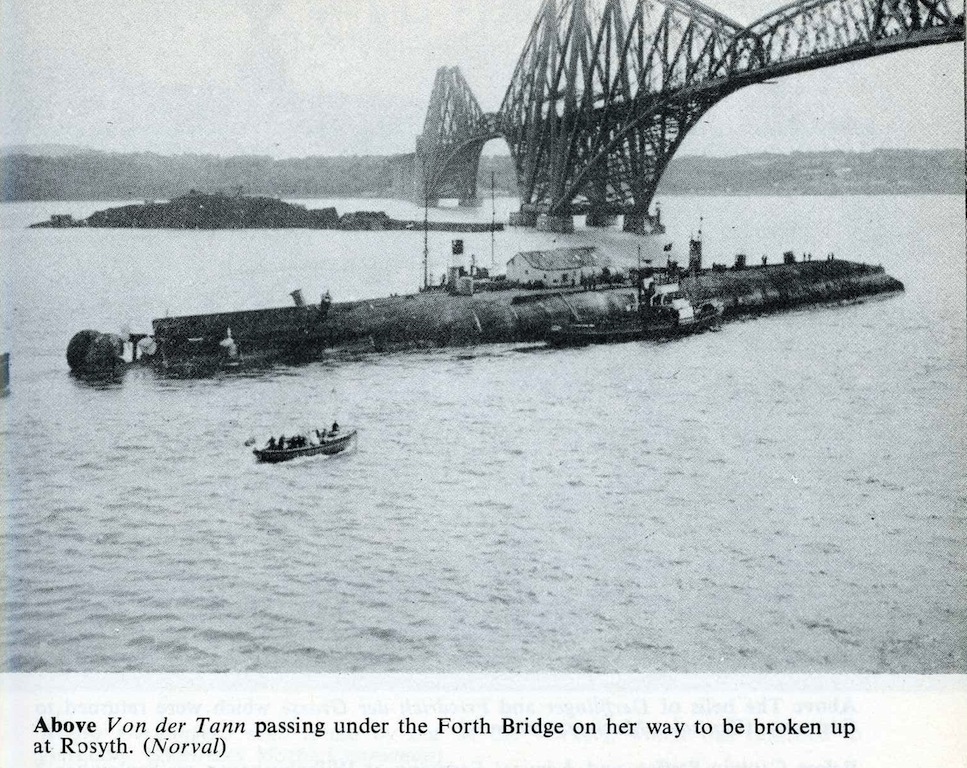
The German High Seas fleet posed a negligible threat to Britain for the remainder of the First World War. According to terms established by the Armistice, the remaining ships were interred at Scapa Flow, where they were intentionally scuttled by the German sailors on June 21, 1919 to prevent their use as scrap metal and as one final act of defiance to their captors.[42] The legacy of the Battle of Jutland continues, however. From the dangers of intercepted communications, to the hazards of micromanagement and assumption, the Battle of Jutland also serves as a study in political divisions within fleets and governments. While the naval battle of 1916 did not directly result in the Second World War, they proved to be a foundation of change which determined the course of national policy and military doctrine for years and decades following the Battle of Jutland.
Notes:
[1] Philip D. Grove, and Duncan Redford, The Royal Navy, (London: I. B. Tauris, 2014), accessed January 27, 2017, ProQuest Ebook Central, 40.
[2] Reinhard Scheer, “Germany’s High Sea Fleet in the World War,” richthofen.com, 1920, accessed January 27, 2017, http://www.richthofen.com/scheer/scheer02.htm, 2.
[3] Michael Epkenhans, Frank Nägler, and Jörg Hillmann, Foreign Military Studies: Jutland: World War I’s Greatest Naval Battle, (Lexington, US: The University Press of Kentucky, 2015), accessed January 27, 2017, ProQuest ebrary, 144.
[4] Michael A. Palmer, Command at Sea: Naval Command and Control since the Sixteenth Century, (Cambridge, US: Harvard University Press, 2007), accessed January 27, 2017, ProQuest ebrary, 240-241.
[5] Ibid., 233.
[6] Michael Epkenhans, Frank Nägler, and Jörg Hillmann, Foreign Military Studies: Jutland: World War I’s Greatest Naval Battle, 15.
[7] Reinhard Scheer, “Germany’s High Seas Fleet in the World War,” 11a.
[8] Michael Epkenhans, et al., 145
[9] Ibid., 150.
[10] Scheer, 11d.
[11] Michael Epkenhans, et al.,144.
[12] Vincent P. O’Hara, Richard Worth, and W. David Dickson, To Crown the Waves: The Great Navies of the First World War, (New York, US: Naval Institute Press, 2013), accessed January 27, 2017, ProQuest ebrary, 163.
[13] Michael A. Palmer, Command at Sea: Naval Command and Control since the Sixteenth Century, 236.
[14] Michael Epkenhans, et al., 150.
[15] Michael Epkenhans, et al., 157-158.
[16] Philip D. Grove and Duncan Redford, The Royal Navy, 69.
[17] Ibid., 163.
[18] Redford, 72.
[19] Michael Epkenhans, et al., 170-171.
[20] Scheer, 10d.
[21] Arthur James Balfour, “Fruits of the Battle of Jutland,” in The War of Democracy, the Allies’ Statement; Chapters on the Fundamental Significance of the Struggle for a New Europe, (Garden City, N. Y.: Doubleday, Page & Company, 1917), accessed January 27, 2017, https://archive.org/details/warofdemocracyal00brycrich.332.
[22] Ibid., 333.
[23] James E. Kitchen, Alisa Miller and Laura Rowe eds., Other Combatants, Other Fronts: Competing Histories of the First World War, (Newcastle-upon-Tyne, United Kingdom: Cambridge Scholars Publishing, 2011), accessed January 27, 2017, ProQuest ebrary, 72-73.
[24] Scheer, 11d.
[25] Grove,74.
[26] Nicholas Best, The Greatest Day in History: How, on the Eleventh Hour of the Eleventh Day of the Eleventh Month, the First World War Finally Came to an End, (New York, US: PublicAffairs, 2009), accessed January 27, 2017, ProQuest ebrary, xxviii.
[27] Roger Chickering, and Forster, Stig, eds., Publications of the German Historical Institute: The Shadows of Total War: Europe, East Asia, and the United States, 1919–1939, (New York, US: Cambridge University Press, 2003), accessed January 27, 2017, ProQuest ebrary, 110.
[28] Alfred Thayer Mahan, Naval Strategy Compared and Contrasted with the Principles and Practice of Military Operations on Land: Lectures Delivered at U.S. Naval War College, Newport, R.I., Between the Years 1887 and 1911, (Boston, Massachusetts: Little, Brown & Co., 1911), accessed January 27, 2017, https://archive.org/details/navalstrategyco00mahagoog, 152.
[29] Julian Stafford Corbett, Some Principles of Maritime Strategy, (London, 1911), accessed January 27, 2017, http://www.gutenberg.org/files/15076/15076-h/15076-h.htm, 211.
[30] Mahan, Naval Strategy, 271.
[31] Vincent P. O’Hara, Richard Worth, and W. David Dickson, To Crown the Waves: The Great Navies of the First World War, 218.
[32] Corbett, Some Principles of Maritime Strategy, 8.
[33] Palmer, 240-241.
[34] Michael Epkenhans, et al., 284.
[35] Corbett, 131.
[36] Vincent P. O’Hara, Richard Worth, and W. David Dickson, To Crown the Waves: The Great Navies of the First World War, 181.
[37] Ibid., 287.
[38] Barney Sneiderman, Warriors Seven: Seven American Commanders, Seven Wars, and the Irony of Battle, (Havertown, US: Savas Beatie, 2006), accessed January 27, 2017, ProQuest ebrary, 217.
[39] Ibid., 220.
[40] Morgan Philips Price, Dispatches from the Weimar Republic: Versailles and German Fascism, (London, GB: Pluto Press, 1999), accessed January 27, 2017, ProQuest ebrary, 104-105.
[41] Ibid., 186.
[42] Gerald Bowman, The Man Who Bought a Navy, (London: George G. Harrap & Co., 1964), 15.
Discover more from milsurpwriter
Subscribe to get the latest posts sent to your email.
 milsurpwriter
Reblogged this on Dave Loves History.
LikeLike