This is a continuation of my thoughts on firearms that changed the course of local and national policy. Revisiting the four basic themes:
What were the types of firearms responsible for major political and national conflict?
Who was the target and what made them vital to a cause or ideal?
Who was the “shooter” and what were their motivations?
Overall, what were the repercussions of these intersections between privately-owned firearms and policy – both foreign and domestic?
The assassination of the Kennedy brothers, Malcom X, and Martin Luther King Jr. highlight the political and cultural turmoil that, as it gained momentum in the U.S. during the 1960s, culminated in escalated domestic violence into the next decade…
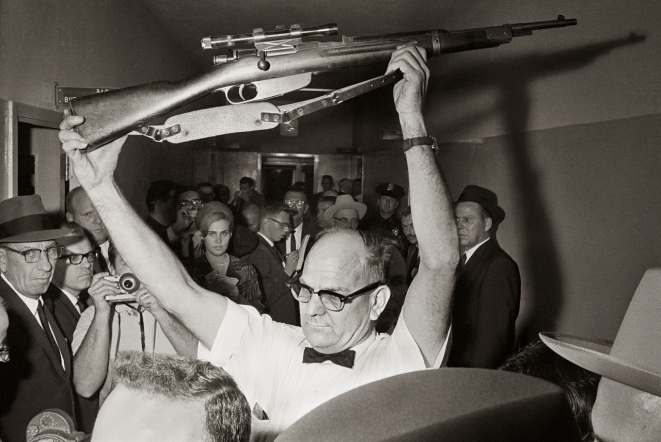
Purchased through a mail-order service for the price of $21.45, the 6.5mm Carcano rifle used by Lee Harvey Oswald (1939-1963) on November 22, 1963 – one of the most significant and debated presidential assassinations in American history – was a simple surplus bolt-action rifle from Italy. Unassuming in appearance, the 24-year-old carbine was easily camouflaged and later described as “curtain rods” by Oswald during casual inquiry. His target, President John F. Kennedy (1917-1963), was chosen for reasons forever lost when an enraged Jack Ruby (1911-1967) shot and killed Oswald shortly after the assassination, though the subsequent investigation found a slow burn of political resentment, activism, and financial difficulties he experienced in the years leading up to the shooting. Kennedy’s legacy after his death in Dallas was the continuation and enactment of the Civil Rights Act of 1964 and the Revenue Act of 1964; most importantly, however, was the fact that this event was the first of several assassinations of highly visible public figures within the decade – including John F. Kennedy’s younger brother, Robert (1935-1968), two years later.
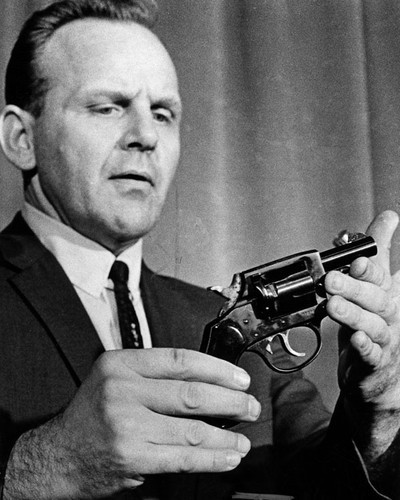
Shrouded in conspiracy and debate much like his older brother’s death, Robert Kennedy’s death on June 4, 1968 by a .22 caliber Iver-Johnson Cadet revolver abruptly ended the chances for another Kennedy as the President of the United States. Obtained in 1965 by Sirhan’s brother, Munir in a private sale for $25, the diminutive revolver was unremarkable in the threat that it posed. Similarly, Robert Kennedy’s political aspirations would seem equally unimposing – his desire to pull American troops and support from the debacle that the conflict in Vietnam was quickly becoming, his platform of increased civil rights measures, and the ongoing support for Israel firmly placed the younger Kennedy as a threat to several fringe elements within the U.S. Sirhan’s own words that “Robert F. Kennedy must be assassinated by 5 June 68” and other journal entries found during the investigation were brought forth in his subsequent trial and conviction, which later was disputed as being fraught with controversy in its conduct.
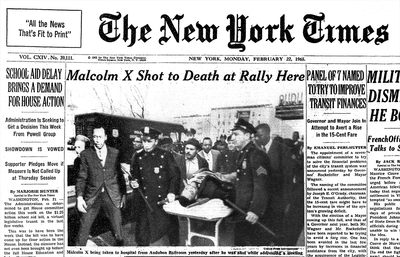
A relatively minor note, in terms of the impact of the firearm-related deaths to key figures, involves the only use of a 12-gauge shotgun. On February 21, 1965, Malcolm Little (1925-1965) – remembered as “Malcolm X,” was shot with a .45-caliber pistol, a .38-caliber revolver, and a sawed-off shotgun at a ballroom rally in New York City, New York. Malcom’s entourage shared his own paranoia about the growing dangers from the CIA, FBI, and the Nation of Islam – the latter due to the growing rift between Malcolm X and Elijah Muhammad. While the true identities of Malcolm X’s assailants were never fully discovered, though Talmage Hayer (or Hagan) – the only man who acknowledged his role in the murder – maintains that the other two charged and sentenced in Malcom X’s assassination were wrongfully convicted. The assassination of a man embittered by the racial divide during his life was memorialized by criticism from the media he had deftly courted in his prime: “He was a case history, as well as an extraordinary and twisted man, turning many true gifts to evil purpose.”
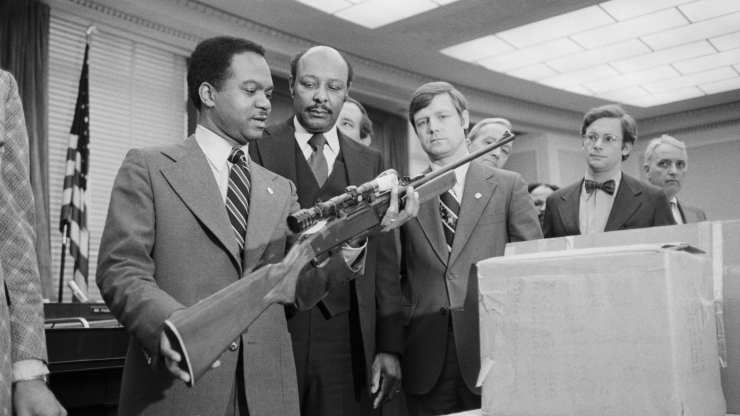
Finally, with the assassinations of staunch advocates for equality for African-Americans serving as bookends, the .30-06 Remington Gamemaster that killed Civil Rights leader Martin Luther King Jr. (1924-1968) on the second floor of the Lorraine Motel in Memphis, Tennessee, on April 4, 1968 was a common firearm of the day. Again, controversy surrounding the guilt of the assassin, James Early Ray (1928-1998), with FBI pressure on King prior to the assassination clouding any coherent and definitive truth in the matter. Ray, an escaped fugitive from Missouri, had been stalking King as early as March 17, 1968 with King’s efforts and visibility towards the growing Civil Rights movement of the decade and his own desire for publicity as possible motives. The resulting civil disturbances that reverberated across America stood as the inevitable backlash and anger of losing such a key figure in a societal and cultural battleground at a crucial time in U.S. history.
It is important to note the context of the turbulent decade in which these four assassinations occurred. The first of six U.S. Ambassadors killed while in office occurred in 1968, when John Mein was taken hostage and later shot by Guatemalan rebels. Later investigations concluded that “…the only correlation he could find was that violence in the country correlates perfectly with violence against Americans.”
The stage was set for the next decade, which proved to be even more volatile. Bombings in the 1970s were the brutal and frequent descendants of the Molotov cocktails of the 1960s; between 1971 and 1972, there were 2,500 bombings in the U.S. – an average of five per day over an 18-month period. Public opinion both fostered the political and social environment for such violent acts of disapproval as well as the apathetic reaction of a jaded and selective media.
Up next: Gandhi, Ghandi, Sadat, and the attempts of 1981…
Discover more from milsurpwriter
Subscribe to get the latest posts sent to your email.
 milsurpwriter
2 thoughts on “Inconsequential Consequences (Part 2 of 4)”