“Unthinkable” was an underrated film with two villains: Steven Younger/Yusuf, the domestic terrorist responsible for hiding nuclear devices in several American cities, and H, the interrogator responsible for doing the… well, unthinkable… in trying to get the locations from Steven/Yusuf. On one hand, you have the obvious threat to peace in the terrorist who is fully prepared and cognizant of what is about to happen to him, but that is not the person who has the “point” in this context – it would be H. H’s balance of Machiavellian ethics brings to question what may be morally right, may not be ethically right… or the other way around, depending on how you look at the argument for/against torture.

H: “It’s not about the enemy. It’s about us. Our weakness. We’re on the losing side, Helen. We’re afraid, they’re not. We doubt, they believe.”
Agent Helen Brody: “We have values.”
H: “And our values have cost us how many lives? It’s not about that guy out there. He’s not the problem. You are.”
(Noteworthy inclusion of Stephen Root in the movie, though not once did I see a red stapler in the background…)
Gaius Baltar from “Battlestar Galactica.” If you follow my activity here, you by now know that I tend to linger on this series. What can I say – it was very good writing. Baltar was no exception to fantastic character development. The guy was a weasel at the start of the series, but by the end had evolved into a profound character with a flock of dogmatic groupies. Strike that last – this is a serious post. Gah – I hated Baltar and waited for his demise, yet was pleasantly surprised by his response to the question of how he knew God was on his side:
I don’t. God’s not on anyone side. God is a force of nature, beyond good and evil. Good and evil, we created those. You wanna break the cycle? Break the cycle of birth? Death? Rebirth? Destruction? Escape? Death? Well, that’s in our hands, in our hands only. It requires that we live in hope, not fear.
Noteworthy villain from the same series: Six. The whole line was severely warped – from the moment in the market with the baby to the later conflict with her own programming. However warped she was, though, there was always a compassionate side to her otherwise blatant (and rather sexy) evil.

Gaia from “Appleseed” (the manga, not the movies…ugh…). This seemingly homicidal supercomputer intentionally set out to destroy Olympus and the humans residing there in Appleseed: The Promethean Challenge, but in reality it was merely challenging and fostering human potential through conflict and survival.

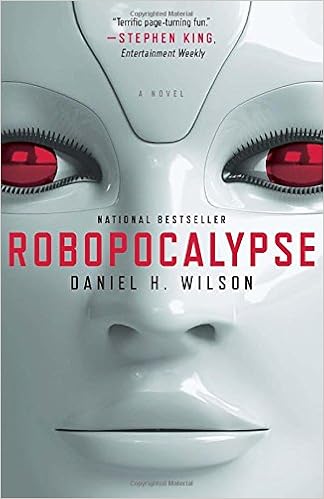
On a similar note, Archos R-14 from Daniel Wilson’s Robopocalypse. Another case of Artificial Intelligence running amok and doing the same silly thing that science fiction AI does – try to kill those problematic and pesky humans. However, along with Shirow’s Gaia, Archos recognizes – and even admires – human tenacity and capability to persevere in spite of all that it can create to destroy those same humans.
This is all I can think of at the moment… I am sure there are more examples, but they would more than likely follow the same theme of AI trying to kill humans.
Discover more from milsurpwriter
Subscribe to get the latest posts sent to your email.
 milsurpwriter
2 thoughts on “What villain actually had a point?”