This was my final paper for my Diplomacy and War II class – the final academic requirement for my Bachelor’s in Military History.
I have a couple of minor issues with this product, and the instructor had noticed. First was the inclusion of the American Revolutionary War – a point that I had intended to incorporate a bit better in describing the power of public opinion when it comes to diplomacy. The second was something that resonates strongly with me to this day, but still missed the point a bit in being included – social media and foreign policy. Perhaps I am being a bit too critical, but in order to critique, one must be able to understand not only what is wrong, but why it is problematic…
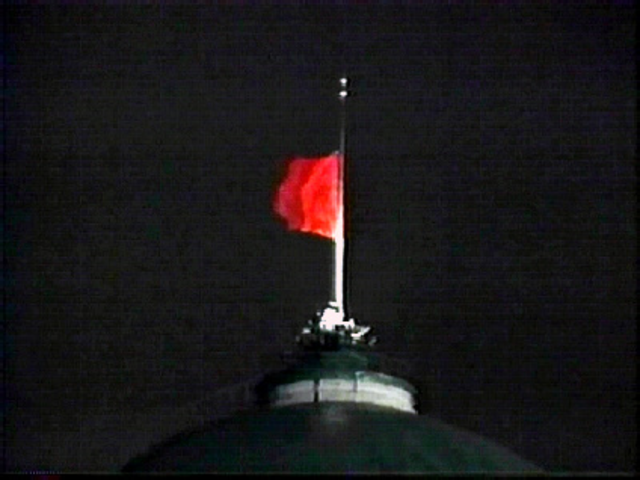
On December 25, 1991, the iconic symbol of the Soviet Union – the golden hammer and sickle emblazoned on a field of crimson – was lowered over the Kremlin for the last time, marking the demise of the Soviet Union and the beginning of the “Commonwealth of Independent States” and a new chapter in Russia’s long history. American newspapers like the New York Times featured fitting and comprehensive obituaries to the death of Communism’s central institution, while the Washington Post provided a quick analysis of Mikhail Gorbachev’s (1931- ) role in the collapse of the troubled socialist nation.[1], [2] As gatekeepers and curators of public opinion, the media’s responsibilities included providing accurate and unbiased information to the constituency of the American leadership, and during the initial phase of this new chapter in American-Russian diplomacy, coverage was comprehensive and balanced. Since 1991, however, these “symbols of public opinion” failed to provide the basic components of “comparison and argument” as espoused by Walter Lippmann (1889 – 1974) in 1922 in his work on public opinion; as a result, the “balance” desired by Lippmann was not achieved in the media coverage and representation of post-Soviet Russia.[3] As diplomacy becomes increasingly difficult between the West and Russia, the role of the Western media has become a key element in guiding public opinion and foreign policy. Consequently, the complexities of accurate and ethical journalism in the coverage of Russian diplomacy since the collapse of the Soviet Union in 1991 continues to pose a challenge for comprehensive and impartial reporting in Western media.
The role of media in diplomacy is a complex and interdependent relationship centered around information, and the interaction between the news media and foreign policy in the United States had been interdependent from the beginnings of American history. The goal of winning the “hearts and minds” which would support the American Revolution (1765-1783) was deemed as an asset of immense value to the men who sought to divorce the Colonies from British governance; serving as the foundation and source of inspiration for an extensive media campaign, they campaigned accordingly to further and justify their cause for independence to the audience in North America.[4] Before the creation of the Missouri Journalism School in 1908, the individual contribution to media was typically the result of an informal and unstructured process which was self-taught with little appreciation and understanding in the relationship between public opinion and diplomacy.[5] Diplomacy, when influenced by public opinion, depends on the accuracy, entirety, and timeliness of the information presented. The influence of American cable news coverage during the 1991 Gulf War resulted in the study of what became referred to as the “CNN effect” – the selective highlighting of international events which force political intervention regardless of the impact on a nation’s short and long-term political strategies.[6]
It was during this time that American press, faced with the dissolution of the West’s major adversary, attributed the lingering economic and political chaos from the Gorbachev-era reforms and the conflict in Afghanistan during the 1980s as some of the most important contributing factors to the collapse of the Soviet Union.[7] Prior to 1991, Western media coverage within the Soviet Union was limited to reports which were agreeable to the Communist leadership. Soviet diplomatic efforts were portrayed as resolute and often petulant in the face of Western attempts to stabilize and resolve points of contention between the West and the Soviet Union.[8] Following the fall of the Soviet Union in 1991, the media coverage of the transitional government and its diplomatic goals was extensive but short-lived. Western media was described as “dismissive” towards the post-Soviet Russia due to a lack of interest due to cultural, political, and social differences and an overall apathetic approach to rectifying these basic components of diplomacy.[9] The shift in Western press on the topic of Russia in the 1990s was the result of several factors – notably the American domestic policies, political scandals, and growing terrorist threats which eclipsed interest in foreign affairs.[10] Most importantly, however, was the simple fact that the official end of the Cold War effectively closed minds of any serious media interest in the affairs and diplomatic efforts of Russia.
The terrorist attacks of September 11, 2001 forged a momentary sense of international solidarity in the face of this new global threat. Russia, faced with internal problems of its own, was challenged by complicated foreign policy in Chechnya starting in 1994 and further stymied by subsequent conflicts in Georgia in 2008 and Crimea in 2014.[11] Economic troubles, which were the product of the transition from the centralized models which were functional under Communism to the Western-style free markets, provided little assistance to the newly-formed legitimate government of Russia.[12] As a result, American and British press provided sporadic coverage of Russia in terms of economic potential and financial reality; the entertainment industries in the west added to the problem by compounding and reinforcing the growing stereotype of Russia as a backwards haven for opportunistic organized crime.[13] These two factors effectively limited the capacity of an informed public to comprehend and assert their wishes and desires concerning national relations with Russia upon elected officials. Until the 2016 Presidential Election, the dedicated media coverage in Western press following 2001 was primarily limited to accusatory and partial narratives on Russia’s involvement in the Syrian Civil War, Ukrainian sovereignty, and Eastern European concerns of encroaching influence from the former Soviet Union.
The influence of Western media on Russian diplomacy since 1991 can be broken down into two distinct phases – the decade following the fall of the Soviet Union, and the seventeen years since September 11, 2001. In the first and early phase, Western news outlets largely ignored the financial and political difficulties in the Soviet-Russia transition of the 1990s; and as a result, many opportunities for the two former adversaries to form a beneficial and mutually supportive relationship were lost. Though initiatives started by the contemporary American leadership commenced in 1993 and sought to create a strong financial relationship between Russia and the U.S., the appointment of individuals incapable of effectively managing the American role frustrated progress. The additional problems of ownership and security of the considerable nuclear arsenal located within the borders or former Soviet territories and the conflicts in Yugoslavia and Chechnya offered few opportunities for the Western press to provide reassurances to an audience raised with the fears of the Cold War.[14] The present phase was represented by the Western press’ attempts to accurately inform their audiences on the continuation of Russia’s exploits in Chechnya and included coverage of the motivations and findings of the related 2002 Moscow theater hostage crisis.[15] Until Russian intervention in the turmoil which engulfed Ukraine in 2014, Western press largely remained fixed upon the ongoing conflicts in Afghanistan and Iraq and the national implications of those actions.[16] Dominating headlines in 2016 and on, however, has been the heated debate on Russian interference in the 2016 U.S. Presidential elections and the growing animosity between the West and Russia as a result.[17]
Social media’s growing influence on shaping public opinion has also become crucial in the diplomatic efforts between Western nations like the U.S. and Great Britain. The development of dedicated social media platforms like Myspace starting in 2003 created strong platforms for individual observations and commentary on political affairs.[18] As a popular and convenient tool for diplomacy, these services include an international audience that has matured in both utility and influence, allowing a bi-directional level of accessibility to political figures and their constituencies not previously possible. As traditional counterparts, government-sponsored Russian media outlets like Channel One, Russia One, and NTV, along with English-language RT have provided a similar effort to mold the public opinion of their domestic and international audience. Moscow-based social media network Vkontakte has mirrored Western attitudes without the same impact as Facebook, despite the tight controls imposed on other national news services.[19] As social media competes with the timeliness and accessibility of print, radio, and cable news services, the correlation of its influence on diplomacy will continue to be evaluated for the possible relationship between conventional forms of news and the policies and efforts of a nation’s policy.
Public opinion and the media are two entities which are irrevocably linked. As a journalist and media analyst in the 20th century, Walter Lippmann’s critiques of contemporary press remain as valid in the present as they were over a century ago. Maintaining that the sensationalism of the press as being the prime cause of tension between societies and nations, the media’s selective focus on foreign affairs provided the “direct and constant interest” of public opinion “until a crisis is reached.”[20] More importantly, Lippmann cited the creation of a “spiritual division” between two opponents as a beneficial and necessary factor in fostering an effective attitude towards a nation’s adversaries.[21] A century later, these elements are found in the Western media’s coverage of Russian diplomacy since 1991. The overall lack of public interest in the West was nurtured by an ambivalent and apathetic press more concerned with marketable stories and domestic political issues than the financial troubles faced by their former adversary. With no focus or pressure from the public, diplomatic efforts with the former Soviet Union were often relegated to ancillary staff members until problems transformed into crises, thus damaging the trust and confidence of Russian diplomats striving to cooperate with their Western counterparts. Further alienating Russia from the West was the tainted portrayal of Russians in the entertainment industry, resulting in a cultural isolationism which compounded the diplomatic process. This lack of understanding Russia as a nation, culture, and economic entity was succinctly summarized during the 2012 U.S. Presidential debates when Barack Obama, the incumbent President, mocked Mitt Romney’s stance of Russia’s political significance and potential threat as being part of “1980s…foreign policy.”[22] This underestimation of Russia proved to be erroneous by 2015 with Russian intervention in Syria and 2016 with accusations of Russian interference in the U.S. Presidential elections.[23] In terms of Lippmann’s division, not only has this selective focus on the media hindered effective diplomatic efforts through an informed electorate in the U.S., but it has also created a rift within American politics and media as the nation attempts to understand the problem without reflecting upon the cause.
Diplomacy and public opinion compromise services facilitated by the accurate and ethical coverage of impartial journalists. Since the fall of the Soviet Union, Russia has endured self-imposed challenges as well as foreign policy struggles which were complicated by the specter of the Cold War. Western media celebrated the initial demise of a once-potent adversary, but quickly shifted focus to news that was both easy to provide and simple in description. As a result, public opinion on matters involving Russia – with the exception of a limited and interested audience – waned until events and circumstances returned Russia to the spotlight of national attention. As events continue to unfold, Western media will continue to shape public opinion in a manner which will remain consistent in their efforts to mold foreign policy with Russia, as well as divert attention from their failures to act as the unbiased gatekeepers and curators of that very public opinion.
[1] Serge Schmenann, “End of the Soviet Union; The Soviet State, Born of a Dream, Dies,” The New York Times, December 26, 1991, accessed August 26, 2017, http://www.nytimes.com/1991/12/26/world/end-of-the-soviet-union-the-soviet-state-born-of-a-dream-dies.html?pagewanted=all.
[2] Michael Dobbs, “Gorbachev Resignation Ends Soviet Era,” The Washington Post, December 26, 1991, accessed August 26, 2017, https://www.washingtonpost.com/archive/politics/1991/12/26/gorbachev-resignation-ends-soviet-era/00444c16-0fe3-4b35-96df-e514956ee354/?utm_term=.af5c410275e4.
[3] Walter Lippmann, Public Opinion, (W.W. Norton & Company: New York, 1922), accessed August 26, 2017, http://wwnorton.com/college/history/america-essential-learning/docs/WLippmann-Public_Opinion-1922.pdf, 9-10.
[4] David Copeland, Media’s Role in Defining the Nation: The Active Voice, (New York: Peter Lang Publishing Inc., 2013), accessed August 26, 2017, ProQuest Ebook Central, 11.
[5] Steve Weinberg, Journalism of Humanity: A Candid History of the World’s First Journalism School, (Columbia: University of Missouri Press, 2008), accessed August 26, 2017, ProQuest Ebook Central, 1-2.
[6] P. Seib, Media and Conflict in the Twenty-First Century, (New York: Palgrave Macmillan US, 2005), accessed August 26, 2017, ProQuest Ebook Central, 4.
[7] Diego Cordovez and Selig S. Harrison, Out of Afghanistan: The Inside Story of the Soviet Withdrawal, (Oxford University Press, 1995), accessed August 26, 2017, ProQuest Ebook Central, 5.
[8] Bill Keller, “Last Soviet Soldiers Leave Afghanistan,” nytimes.com, 1989, accessed August 26, 2017, https://partners.nytimes.com/library/world/africa/021689afghan-laden.html?mcubz=0.
[9] Susan Jacoby, “Now That We’re Comrades, We Don’t Care Anymore,” The Washington Post, 2003, accessed August 26, 2017, https://search-proquest-com.ezproxy2.apus.edu/docview/409557351?accountid=8289.
[10] P. Seib, Media and Conflict in the Twenty-First Century, 220.
[11] Nicole Mazurova, “Russia’s Response to Terrorism – History and Implications for U.S. Policy,” americansecurityproject.org, 2016, accessed August 26, 2017, https://www.americansecurityproject.org/wp-content/uploads/2016/10/Ref-0200-Russias-Response-to-Terrorism.pdf, 2, 9.
[12] “Meet the Press, April 4, 1993,” Washington: NBC News Archive, 1993, accessed August 26, 2017, https://search-proquest-com.ezproxy2.apus.edu/docview/1822713045?accountid=8289.
[13] Susan Jacoby, “Now That We’re Comrades, We Don’t Care Anymore.”
[14] “Bill Clinton, Boris Yeltsin, and U.S.-Russian Relations,” history.state.gov, n.d., accessed August 26, 2017, https://history.state.gov/milestones/1993-2000/clinton-yeltsin.
[15] Michael Wines, “The Aftermath in Moscow: Post-Mortem in Moscow; Russia Names Drug in Raid, Defending Use,” nytimes.com, 2002, accessed August 26, 2017, http://www.nytimes.com/2002/10/31/world/aftermath-moscow-post-mortem-moscow-russia-names-drug-raid-defending-use.html?mcubz=0.
[16] “Ukraine Crisis: Western Leaders Scramble to Respond to Russian Incursion,” foxnews.com, 2014, accessed August 26, 2017, http://www.foxnews.com/world/2014/03/02/crimean-leader-claims-control-asks-russia-for-help-in-restoring-peace.html.
[17] Jeremy Diamond, “Russian Hacking and the 2016 Election: What You Need to Know,” cnn.com, 2016, accessed August 26, 2017, http://www.cnn.com/2016/12/12/politics/russian-hack-donald-trump-2016-election/.
[18] Eilene Zimmerman, “From Myspace’s Ashes, Silicon Start-Ups Rise,” nytimes.com, 2013, accessed August 26, 2017, http://www.nytimes.com/2013/09/08/technology/from-myspaces-ashes-silicon-start-ups-rise.html.
[19] “Russia profile – Media,” bbc.com, 2017, accessed August 26, 2017, http://www.bbc.com/news/world-europe-17840134.
[20] Walter Lippmann, The Stakes of Diplomacy, (New York, NY: Henry Holt and Company, 1915), accessed August 26, 2017, https://archive.org/details/stakesofdiplomac00lippuoft, 54-55, 197.
[21] Ibid., 39-40.
[22] “CPD: October 22, 2012 Debate Transcript,” debates.org, 2012, accessed August 26, 2017, http://www.debates.org/index.php?page=october-22-2012-the-third-obama-romney-presidential-debate.
[23] Ed Payne, Barbara Starr, and Susannah Culliane, “Russia Launches First Airstrikes in Syria,” cnn.com, 2015, accessed August 26, 2017, http://www.cnn.com/2015/09/30/politics/russia-syria-airstrikes-isis/index.html.
Discover more from milsurpwriter
Subscribe to get the latest posts sent to your email.
 milsurpwriter
5 thoughts on “Post-Soviet Russian Diplomacy and the Western Media”