“Strength is the product of struggle. You must do what others don’t to achieve what others won’t.” Henry Rollins
I recently was invited to show support for one of my best friends as he competed in the 2017 Mid-Atlantic Strongman Challenge in Charlotte, North Carolina. Given that my experiences from a similar event a year earlier in Raleigh were inspiring, I jumped at the opportunity with the intent to write about my perceptions on strength and how such an event is relevant to the average person.
What actually happened was I ended up taking more pictures and posting my observations on Facebook…

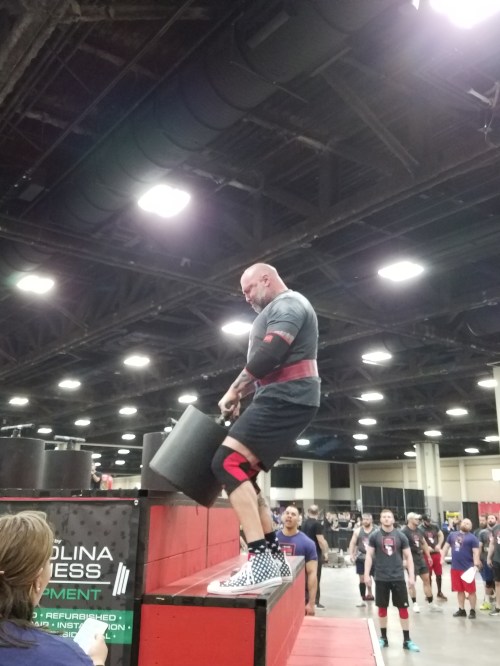
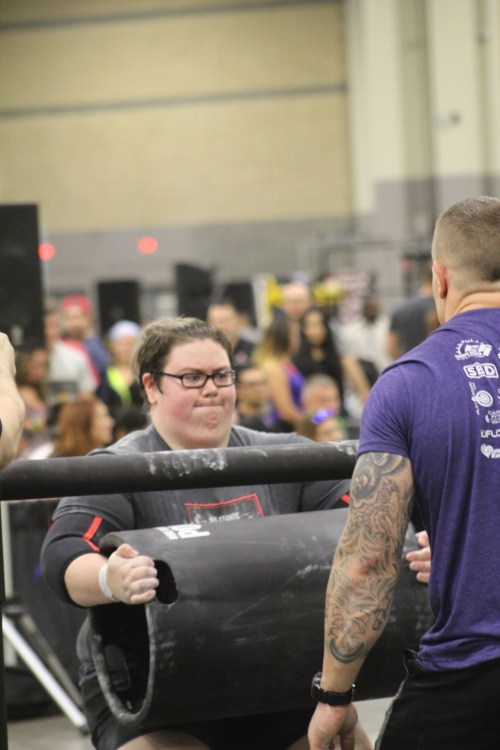
Strength… stamina… and aesthetics.”
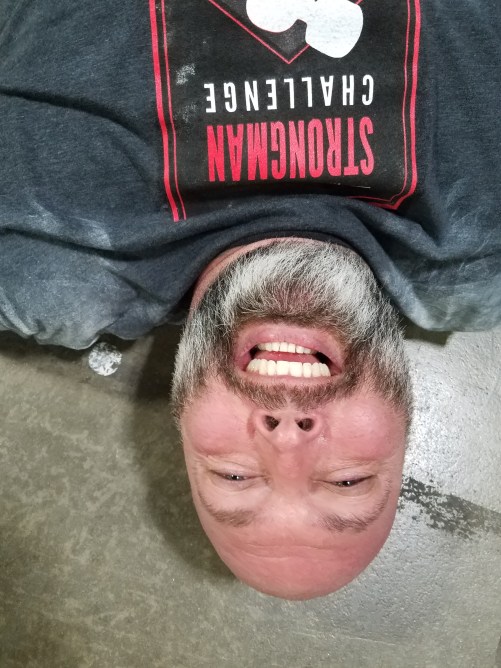
However, mild attempts at wit aside, the event was more than the challenge of obstinate weights to be lifted for sheer pleasure. As I discovered in chatting with one of the competitors, religion and weightlifting offers an interesting potential for comparison. A theology major, she was in the process of working on a thesis relating powerlifting to faith. Later discussion took it a step further, and doing a bit more research, I found parallels. Like most contemporary religions, factions within the sport emerged as part of the natural evolution of weightlifting continued from its relatively modest origins of “odd lifts” in the 1950’s. An example of this is the ongoing debate over “equipped” and “unequipped,” where the spirited discussions become as animated as ones involving Catholics and Protestants. While there are overall guidelines for both faith and weightlifting, what is deemed “proper” vary in both interpretation and adherence. Elaborating more, I ventured along the idea that such a comparison could not be limited to Western faith in that the capacity for self-realization of their ability was similar to the idea of Nirvana for Buddhists. Foundationally, the idea of the challenges faced by man and woman in reaching a goal remain similar and one ripe for future exploration.
After the competition and the exhausted specimens of brute strength and stubborn tenacity had passed out, I was texting my wife and marveling about the events and people of the day. I had set out on the trip with a simple question: “Why?” Why push oneself to lift many times their body weight, over and over again? Why risk temporary pain and possible permanent disability? As I mulled over the burdens hoisted of the day, my wife responded: “In a way, it reminds me of what I do,” and she had a point. As a pianist with over 30 years’ experience, she can be routinely found practicing various complex compositions… rehearsing until the timing is perfect with other musicians until the result is the transmission of an emotion from a long-dead composer to our modern ears. Weight of a different sort, but with a similar burden. The dedication is similar: no matter what personal or health issues are going on, the piano – just like the weights – is still there, waiting. For some powerlifters, injury is not a detractor from lifting, and are often part of the motivation and process for recovery – in some cases, competitions are won in spite of injuries. Though not exactly the same, the insane levels of dedication to their art and their motivations are the same, for in both cases, “Why?” is simply answered with: “Because.”
Shortly after the competition last year, I asked Dennis what his motivations were. “I train harder and harder to be stronger than everyone else,” was his reply, but he went on further to talk about the community of like-minded individuals seeking to help each other reach their own potential. Whether the desire is the sheer display of strength, to fight inner demons, to be stronger than peers, or to prove that age or gender are moot points, the reasoning behind many of the people I met in Charlotte all shared not only the common individual goal of defying gravity and mass, but to be part of a supportive network of individuals striving to be better in many ways. Bill Kazmaier, winner of a slew of powerlifting competitions, reiterated a key concept during his talk the night before the competition: “the measure of a man is his performance on his worst day.” In Charlotte, there were not so good days along with pretty good ones, but the overall mood of the competitors was to inspire and dare their peers to be as great as possible.
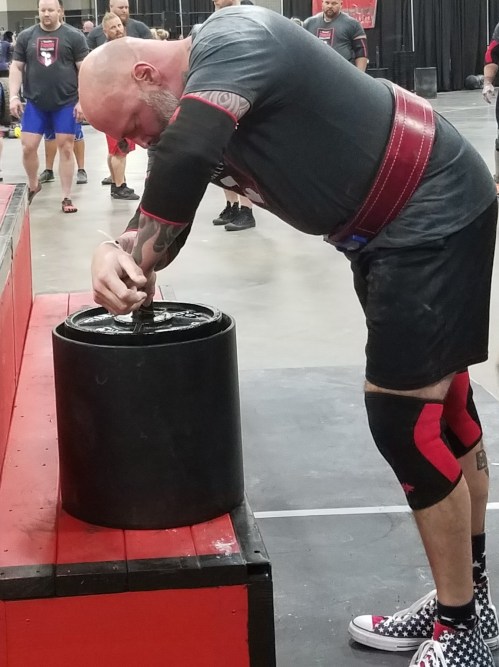
For both powerlifters and pianists, the challenge is there, and it takes a certain person to accept that challenge and do with it what they can until they are exhausted – mentally and physically… and even then, they rest and consider the next event… just because it’s who they are and what they love.
Discover more from milsurpwriter
Subscribe to get the latest posts sent to your email.
 milsurpwriter
1 thought on “Why?”